
Washed Out originally uploaded by Red Wolf
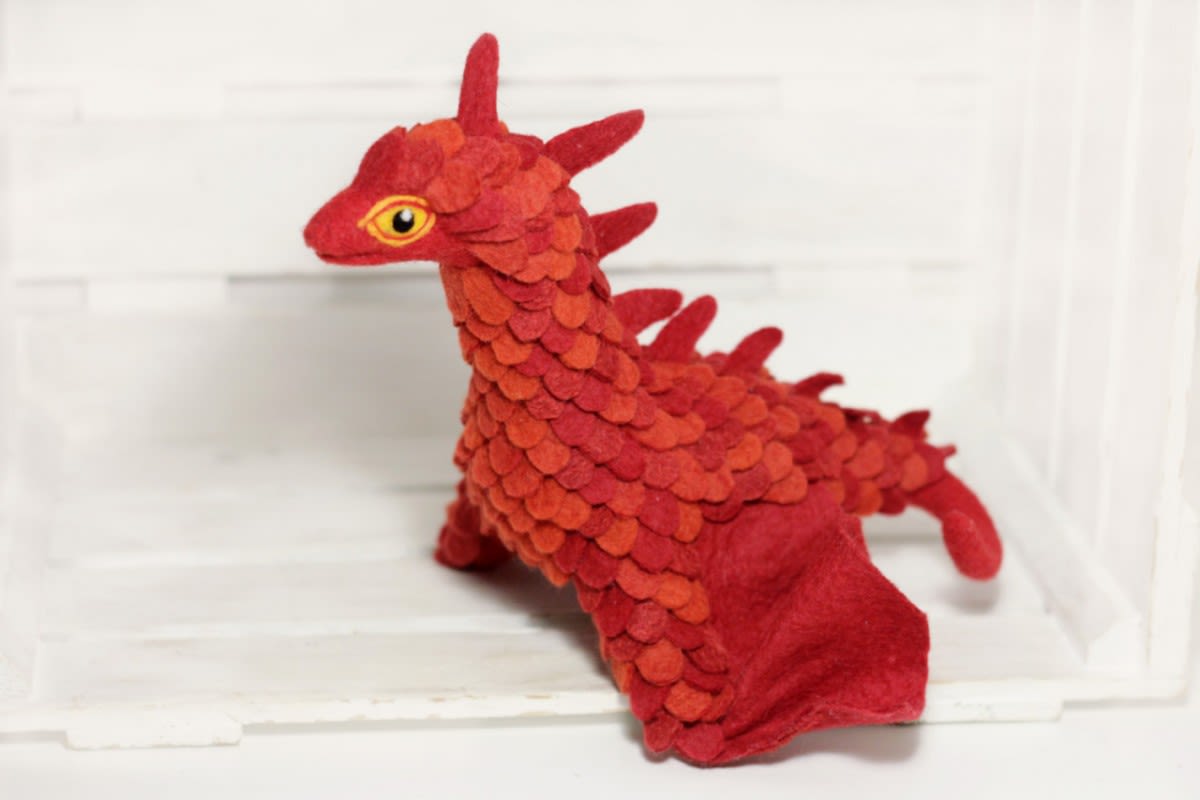
Cute, bright and funny guy, shiny as summer sun. Needle felted out of 100% New Zealand wool coloured in Italy and Australian wool coloured in Germany. Wings are made using frame. Size: 15cm up to head — via via Etsy

A veteran group of squatters has occupied an empty £15m central London property purchased by a Russian oligarch in 2014 and opened it as a homeless shelter.
The extensive, five-storey Grade ll-listed Eaton Square property was bought by Andrey Goncharenko, a little-known oligarch who has bought a number of luxury properties in London in recent years.
The squatters — Autonomous Nation of Anarchist Libertarians, known as ANAL — said they entered the building through an open window on 23 January and have accommodated about 25 homeless people so far, many of whom had been sleeping rough around Victoria station.
Tom Fox, 23, one of the squatters, said: It is criminal that there are so many homeless people and at the same time so many empty buildings. Our occupation is highlighting this injustice.
New rough sleeper figures published this week have revealed an increase of 16% from last year, to more than 4,000.
More than 200,000 homes have been empty for more than six months, according to new government figures — via redwolf.newsvine.com

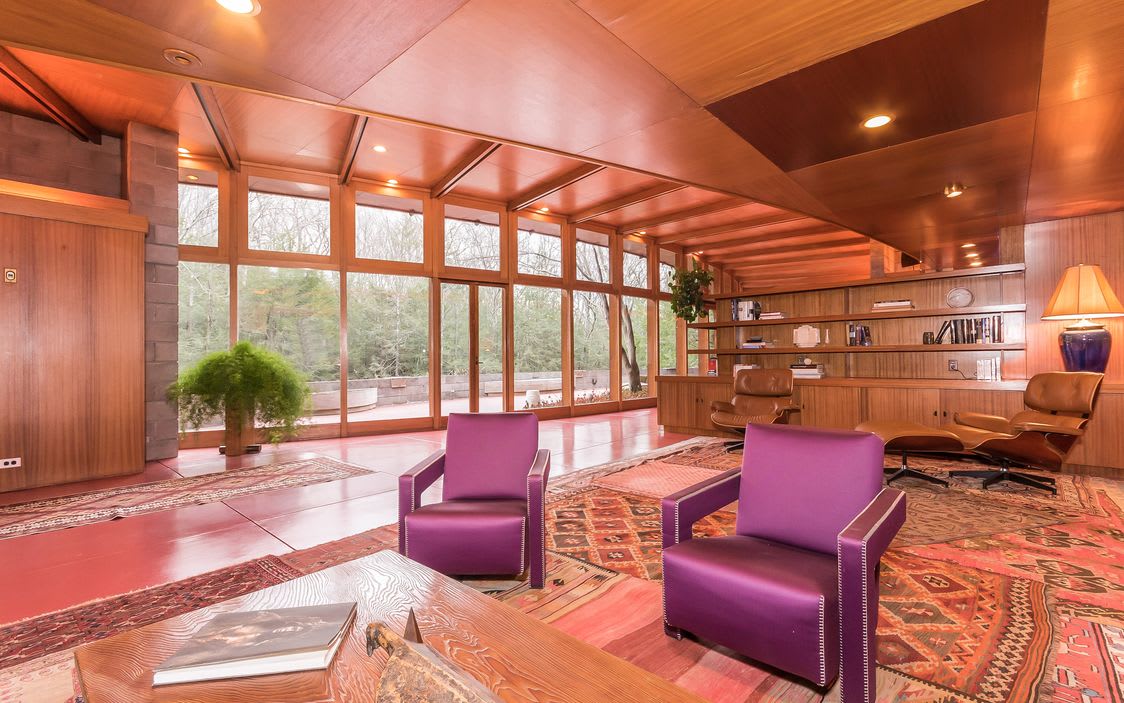
The Wall Street Journal reports that the Frank Lloyd Wright-designed Tiranna, a 1955-built residence named after the aboriginal word for running waters
, has just gone on the market in New Canaan, Connecticut.
Purchased by memorabilia mogul and philanthropist Ted Stanley and his wife Vada about 20 years ago, the incredible 15-acre property, also known as the Rayward-Shepherd House and the John L Rayward House, has been well-preserved after undergoing an extensive restoration that also added a few updates.
The horseshoe-shaped house measures nearly 7,000 square feet and is arranged around a courtyard and includes seven bedrooms, eight baths, expansive open-plan living space, a rotating steel-and-glass observatory on the roof, wood panelling throughout, built-ins like storage, shelving, and furniture, multiple fireplaces — including one with a gold-leaf chimney, carved beams, floor-to-ceiling windows, a greenhouse, guest studio, and so much more.
The hemicycle is situated beside the Noroton River and a waterfall and is surrounded by woods. Other amenities include a swimming pool, tennis court, a large barn, and original gardens and landscaping Frank Okamura and Charles Middeleer. Located at 432 Frogtown Road, this one-of-a-kind home is available for $8,000,000 through Houlihan Lawrence — via Curbed


Orange Bracket Fungi (Pycnoporus coccineus), Vacuum is Scary, Worried and Done originally uploaded by Red Wolf

Veteran actor Sir John Hurt has died aged 77, his agent has said.
The Bafta-winning star, known for his roles in Alien and The Elephant Man, continued working despite being diagnosed with pancreatic cancer in 2015.
He recently starred as Father Richard McSorley in Jackie, the biopic of President John F Kennedy’s wife.
US director Mel Brooks described Sir John as cinematic immortality
, as tributes poured in for the star — via BBC News
In a BBC interview in 1999 David Bowie predicted the huge impact of the Internet in society and the new ways of expression, art and communication while interviewer Jeremy Paxman looks quite sceptical about the real application of the new tool
— via Youtube

Sales of George Orwell’s dystopian drama 1984 have soared after Kellyanne Conway, adviser to the reality-TV-star-turned-president, Donald Trump, used the phrase alternative facts
in an interview. As of Tuesday, the book was the sixth best-selling book on Amazon.
Comparisons were made with the term newspeak
used in the 1949 novel, which was used to signal a fictional language that aims at eliminating personal thought and also doublethink
. In the book Orwell writes that it means the power of holding two contradictory beliefs in one’s mind simultaneously, and accepting both of them
.
The connection was initially made on CNN’s Reliable Sources. Alternative facts is a George Orwell phrase,
said Washington Post reporter Karen Tumulty.
Conway’s use of the term was in reference to White House press secretary Sean Spicer’s comments about last week’s inauguration attracting the largest audience ever
. Her interview was widely criticized and she was sub-tweeted by Merriam-Webster dictionary with a definition of the word fact. On last night’s Late Night with Seth Meyers, the host joked: Kellyanne Conway is like someone trying to do a Jedi mind trick after only a week of Jedi training
.
In 1984, a superstate wields extreme control over the people and persecutes any form of independent thought — via redwolf.newsvine.com
I understand there’s been some confusion online as to whether it’s ever right to punch a Nazi in the face. There is a compelling argument that all speech is equal and we should trust to the discourse to reveal these ideas for what they are and confidently expect them to be denounced and crushed out by the mechanisms of democracy and freedom.
All I can tell you is, from my perspective as an old English socialist and cultural liberal who is probably way to the woolly left from most of you and actually has a medal for services to free speech — yes, it is always correct to punch Nazis. They lost the right to not be punched in the face when they started spouting genocidal ideologies that in living memory killed millions upon millions of people. And anyone who stands up and respectfully applauds their perfect right to say these things should probably also be punched, because they are clearly surplus to human requirements. Nazis do not need a hug. Nazis do not need to be indulged. Their world doesn’t get better until you’ve been removed from it. Your false equivalences mean nothing. Their agenda is always, always, extermination. Nazis need a punch in the face.
(And the argument that such assaults allow Nazis to get more attention doesn’t work so well when they were already going live on a national television network, because this is where we are now. This is how normalised their presence in our culture is.)
Glad we got that cleared up — via Orbital Operations Transdimensional Distribution
We’ve all seen those terrible fake watches, and they’re easy to spot, right? But now there’s a new challenge: fakes are getting harder to tell. Here are two Rolex Submariner 116610LNs, one real, one not — can you spot the fake Rolex? — via Youtube
If you were to judge the small, northwestern Montana town of Whitefish solely on the national media frenzy that has descended upon it in recent weeks, like a blizzard that blots out everything else, then you’d probably write it off as a frightening place — an intolerant place, an unwelcoming place, a place where the worst of the United States has taken hold.
But what if the opposite were true? What if, at a moment of mounting political anxiety and creeping Internet thuggery, of fear and loathing and all the rest of it, Whitefish has, in fact, been demonstrating how America, at its best, can defeat such ugliness in the months and years ahead?
Because that’s what I found when I actually bothered to spend some time there. In the first weeks of January, I made two extended trips to Whitefish. I got to know dozens of locals — activists and actors, skiers and shopkeepers, loggers and L.A. transplants. What I found was a story that was a lot more interesting — and inspiring — than the one I had been reading about on the Internet — via redwolf.newsvine.com

In 1998, Mattel began selling the electronic Barbie Typewriter to replace the earlier mechanical typewriter in the Barbie line, thus continuing the toy industry habit of introducing young children to technology that is 30 years out of date. Nonetheless, it could keep children busy learning to read and write away from your word processor. But the typewriter had a secret. It was manufactured by Mehano in Slovenia, which already made other children’s typewriters. Mehano took an older model and made it pink and purple for Mattel. The base model they used had a wonderful secret capability that was sadly never included in Mattel’s marketing.
Apart from a range of typesetting features, such as letter-spacing and underline, this children’s toy was capable of encoding and decoding secret messages, using one of 4 built-in cipher modes. These modes were activated by entering a special key sequence on the keyboard, and was explained only in the original documentation.
When the E-115 was adopted by Mattel as an addition to the Barbie product line, it was aimed mainly at girls with a minimum age of 5 years. For this reason the product was given a pink-and-purple case and the Barbie logo and image were printed on the body. As it was probably thought that secret writing would not appeal to girls, the coding/decoding facilities were omitted from the manual. Nevertheless, these facilities can still be accessed if you know how to activate them.
If you happen to have one of these typewriters sitting around, you can find the instructions for using the crypto codes at Crypto Museum — via Neatorama
Sophie lives alone with her mother on a desolate farm in the middle of nowhere. A place that hides a secret far worse than she could have imagined — via Vimeo
When you survey the wreckage of 2016, it’s easy to forget that the most seismic democratic events were brought about by minorities.
Only 37 percent of eligible Britons voted to leave the European Union. The case is even clearer in the American election, which Donald J Trump won despite having persuaded only a quarter of the American electorate to support him. Mr Trump triumphed in a low-turnout election.
As we scramble to explain the upheavals in democratic politics, we may be describing shifts that, while significant, are smaller than we think.
It’s time for democracies to adopt compulsory voting. I say this from Australia, one of about a dozen countries where people can be penalized for not voting (about a dozen more have compulsory voting on the books but don’t enforce it). We’ve done so at the federal level since 1924, following a drop in voter turnout. We’re now required by law to enrol at 18 years old (though this isn’t strictly monitored), and we’re fined if we fail to vote. Around three-quarters of Australians have consistently supported compulsory voting, and there is no meaningful movement for change.
The evidence is mixed on whether compulsory voting favours parties of the right or the left, and some studies suggest that most United States federal election results would be unchanged. But all that misses the point because it overlooks that compulsory voting changes more than the number of voters: It changes who runs for office and the policy proposals they support — redwolf.newsvine.com

Who knew that the humble, utilitarian traffic light could look so haunting—and beguiling? As seen through the lens of Lucas Zimmermann, they take on an otherworldly aspect, their red, yellow, and green lights casting an altogether ghostly aura that emanates like a very basic rainbow in a dark, foggy sky.
The Weimar, Germany-based photographer is self-taught and began the series over two years ago, taking to the streets at night and training his camera on what are normally overlooked and under-appreciated objects. But with a little magic, he has manipulated them into tableaus that suggest something sinister.
The empty streets are visible just as far as the signals’ rays’ reach, exposing bare trees and minimal side-of-the-road landscaping. But beyond that, who knows what lurks? — via Curbed
Today, Iceland tops the European table for the cleanest-living teens. The percentage of 15- and 16-year-olds who had been drunk in the previous month plummeted from 42 per cent in 1998 to 5 per cent in 2016. The percentage who have ever used cannabis is down from 17 per cent to 7 per cent. Those smoking cigarettes every day fell from 23 per cent to just 3 per cent.
The way the country has achieved this turnaround has been both radical and evidence-based, but it has relied a lot on what might be termed enforced common sense. This is the most remarkably intense and profound study of stress in the lives of teenagers that I have ever seen,
says Milkman. I’m just so impressed by how well it is working.
If it was adopted in other countries, Milkman argues, the Icelandic model could benefit the general psychological and physical well-being of millions of kids, not to mention the coffers of healthcare agencies and broader society. It’s a big if — via redwolf.newsvine.com

Toshiba CT Machine originally uploaded by Red Wolf
A litter of six Cheetah cubs, born in September 2016 at Burgers’ Zoo, is now out of the den and exploring outdoors — via Youtube


 RSS – Posts