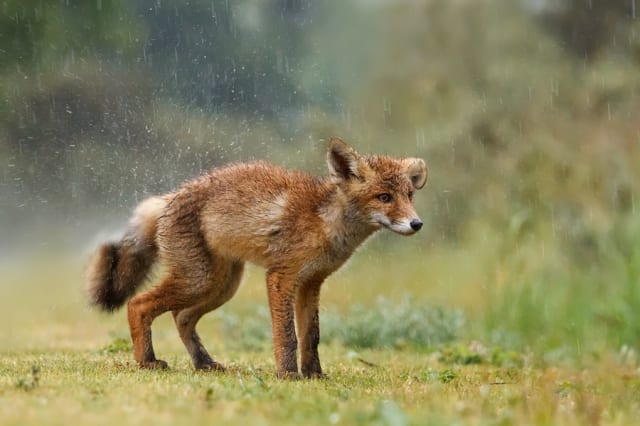
Absolutely soaking wet red fox kit — via 500px
Absolutely soaking wet red fox kit — via 500px

Go on a deep sea adventure with this incredible giant squid pillow. This pillow is hand printed, stuffed, sewn and will make a great addition to any home or the perfect toy for any child — via Etsy
On 12 March an Inuit hunter shot and killed a female Polar Bear near Point Lay, Alaska. When he realised it was a female, he searched for the den and found young Kali, a 3-4 month old cub. The hunter then carried the cub to the Department of Wildlife Management who then passed the healthy cub to the Alaska Zoo who was equipped to care for the orphan — via ZooBorns

These 6 Gauge (4mm) Plugs have been made from real Octopus Tentacles in Sterling silver. Each piece has been handmade, textured and finished so you can have a unique piece of art in your ears — via Etsy

Following an uncertain start to life, Chai, a Red Panda cub born at Mogo Zoo on the South Coast of New South Wales, will be making her first public debut. Born on 3 December, the baby was rejected by mum at just six days old. It was necessary for the Zoo’s veterinarian, Dr Sam Young, to intervene and hand-raise the cub — via ZooBorns

This Sumatran Tiger cub, born at the San Francisco Zoo on 10 February to mother Leanne, has had its first vet check this week and it was determined that it’s a girl. To minimally interrupt mother-cub bonding, the exam was done in less than 5 minutes, revealing that the five-week-old is in excellent health and thriving under her mother’s care. And since this is a solo cub and there is no competition for milk, the baby has a nice big belly and weighed in at 8 pounds. Her next exam will take place around 10 April, when she is 8 weeks old — via ZooBorns
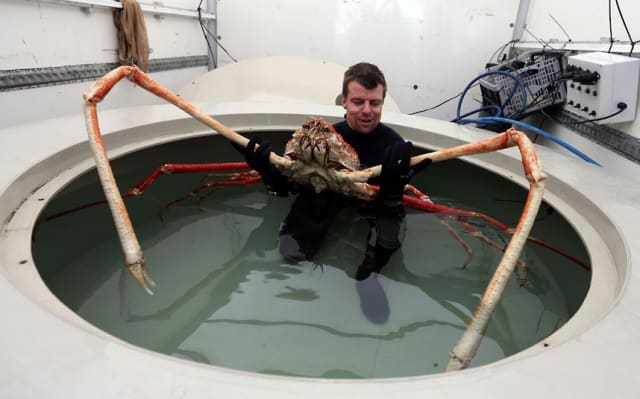
Big Daddy
is, I hope, fully grown. This Japanese Spider Crab lives at the Sea Life Centre in Blackpool, UK. Chris Brown, a curator there, is either moving him or wrestling him, neither of which is advisable — via Neatorama

A darling tiny octopus! It’s hand sculpted from tinted translucent polymer clay and sanded, buffed, then glazed in order to give it that glassy look. It catches the light quite beautifully – via Etsy
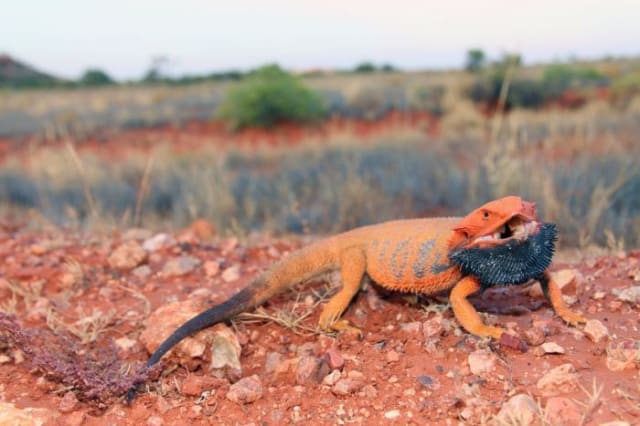
The CSIRO is hoping a new Australian study of native bearded dragons could lead to breakthroughs in medicine and the gathering solar energy.
University of Melbourne scientist Dr Devi Stuart-Fox has just launched a $470,000 study investigating how and why bearded dragons change colours.
They can change colour from almost black, very dark grey, to really bright red particularly when they’re being aggressive with each other,
Dr Stuart-Fox said.
What I’m particularly interested in is changes across the full range of solar radiation or solar energy.
From colours that we can’t see like the ultraviolet all the way through to the near infra-red.
Dr Stuart-Fox is hoping to get a clearer understanding of the evolution of colour changing in animals — via redwolf.newsvine.com
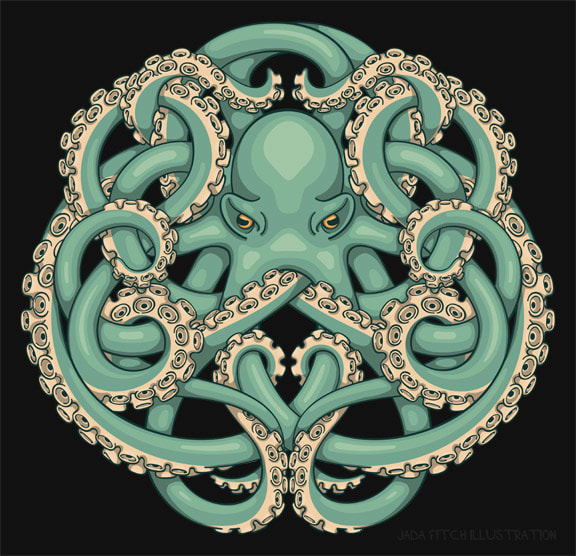
Octopus Emblem T-Shirt Design. Green is the winner! View and buy this design on a variety of tees and other products — via jadafitch
Suckling unnameable ichor as they slither through the viscous, shrieking madness of the intestinal tracts of lunatic termites, a pair of incomprehensibly monstrous single-celled organisms have been named after the creations of the early 20th century science fiction pulp writer, HP Lovecraft.
A University of British Columbia press release quotes Erick James, a biologist a whose impious explorations into the forbidden have unwittingly revealed a terrifying vista of dread.
When we first saw them under the microscope they had this unique motion, it looked almost like an octopus swimming,
said James — via redwolf.newsvine.com
In the past few days, the Internet has been filled with commentary on whether the National Science Foundation should have paid for my study on duck genitalia, and 88.7 percent of respondents to a Fox news online poll agreed that studying duck genitalia is wasteful government spending. The commentary supporting and decrying the study continues to grow. As the lead investigator in this research, I would like to weigh in on the controversy and offer some insights into the process of research funding by the NSF.
My research on bird genitalia was originally funded in 2005, during the Bush administration. Thus federal support for this research cannot be connected exclusively to sequestration or the Obama presidency, as many of the conservative websites have claimed — via redwolf.newsvine.com

Brevard Zoo’s Capybara parents Clancy and Bailey welcomed these three blonde babies on St Patrick’s Day. They are healthy and nursing well. Capybara are herbivores, meaning they eat the leaves of grasses and other plants. They are fussy though, and are known to only eat certain plants and ignore ones they don’t like. Only a week after they are born, baby Capybara can eat grass, although they continue to drink mother’s milk — via ZooBorns
The first hyena cub to be born by caesarean section in Australia has gone on public display for the first time.
The spotted hyena cub was born six weeks ago and has now settled into Monarto Zoo east of Adelaide.
The cub’s five-year-old mother Forest spent three days in labour before vets performed the operation.
Zookeeper Claire Geister says the cub was not breathing when it was delivered and vets feared the worst.
Zookeepers, the vet, the nurses, all of us that were there, we were all on edge. We weren’t expecting it to start breathing again to be honest after three days in labour,
she said.
We gave it some medication and it coughed and then it took its first breath and it was getting very strong very quickly after that.
Ms Geister says the hyena’s unique anatomy makes births particularly complex, with only 20 per cent not hampered by complications — via redwolf.newsvine.com

Sammy Fox, originally uploaded by Melanie Stanton.
Marine biologists have learned new secrets about the Humboldt squid by attaching video cameras to the elusive creature, which has a razor sharp beak and hooks on its suckers and can reach the size of a grown man.
The footage revealed previously unknown information about the carnivorous squid, including that they hunt in large, synchronized groups, are able to travel at nearly 45 mph and rapidly change their body color when they are near other Humboldt squid to communicate, according to a study from Stanford University.
Researchers used the National Geographic Society’s Crittercam to film the behavior of the squid. Getting the camera on the slippery squid took some MacGyver-like innovation. William Gilly, of Stanford University’s Hopkins Marine Station in Monterey, California, used a child’s bathing suit cut to fit like an elastic sleeve.
The footage, along with tagging studies, have shed new light on the creatures — via redwolf.newsvine.com

Octopus, originally uploaded by Brandon Galbraith.
Amphibian horror
isn’t a movie genre, but on this evidence perhaps it should be. Harvard biologists have described a bizarre, hairy frog with cat-like extendable claws.
Trichobatrachus robustus actively breaks its own bones to produce claws that puncture their way out of the frog’s toe pads, probably when it is threatened.
David Blackburn and colleagues at Harvard University’s Museum of Comparative Zoology, think the gruesome behaviour is a defence mechanism.
The researchers say there are salamanders that force their ribs through their skin to produce protective barbs on demand, but nothing quite like this mechanism has been seen before.
The feature is also found in nine of the 11 frogs belonging to the Astylosternus genus, most of which live in Cameroon — via redwolf.newsvine.com


 RSS – Posts