
Bluebird amigurumi, originally uploaded by mohu mohu.

Have you always wanted to be one of those cool people with an octopus on your head? Now you can! This hat has 8 jumbo-sized 2 foot long tentacles, and the suckers on them glow-in-the-dark — via Anime Noms

An elderly South American Coati unexpectedly gave birth to two healthy pups at Zoo Budapest. In the wild, Coatis rarely live longer than seven to eight years, but they have been known to live up to 17 years in captivity. The mother of these two pups, Juliet, is 15 years old. The Zoo’s press release notes that it is almost a matter of biological peculiarity
that she has successfully given birth to two healthy pups at her advanced age. At four years old, the pups’ sire has only been sexually mature for about half a year, making the parents quite the unlikely pair — via ZooBorns
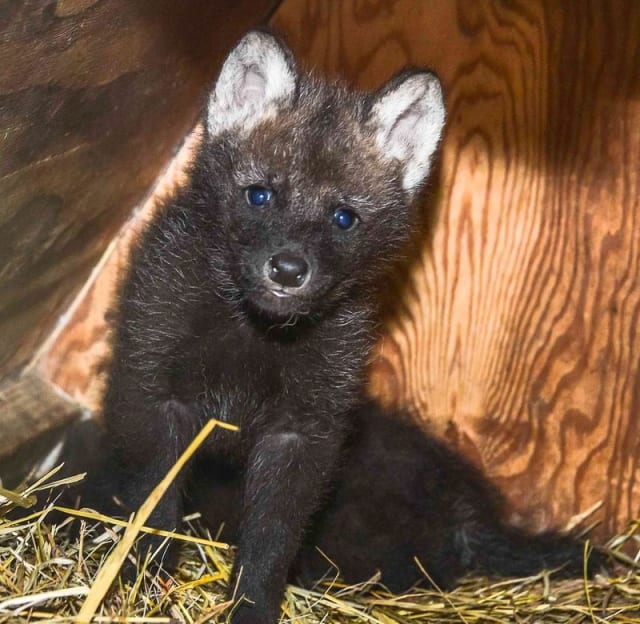
The onset of summer for the Animal Care staff at the Smithsonian Conservation Biology Institute in Front Royal, Virginia, means patiently awaiting endangered-animal births, hand raising youngsters, and saying farewell to cubs that are ready to be matched with mates. All of the species—which range in International Union for Conservation of Nature Red List status from near threatened to endangered—are significant and represent great conservation successes.
One of the new births of these important animals were two male Maned Wolf pups, born on 14 April to 2-year-old female Vitani and 8-year-old male, Paul. The pups received a clean bill of health at their first veterinary exam, appearing robust and healthy. Keepers have nicknamed the pups Bold
and Shy
for their distinctive personalities — via ZooBorns)
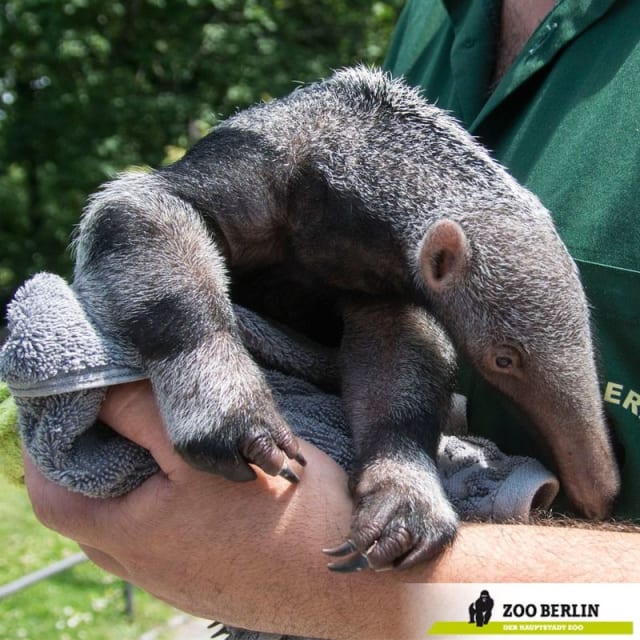
Zoo Berlin welcomed a baby Giant Anteater on 26 May. The baby, named Evita by her keepers, is a female. The name was chosen because E
is the fifth letter in the alphabet, and this is mom Griseline’s fifth surviving baby. Before Evita there were Adolpho, Benita, Carlos, and Danita, all born at Berlin Zoo. Evita is being hand-fed by keepers and receives three additional bottle meals per day — via ZooBorns


A black squid pendant for all (most) occasions! It’s hand sculpted from polymer clay and it has iridescent blue-purple eyes. Comes with a jump ring ready to be put on your favourite chain — via Etsy

Spider No 26 was made with recycled watch parts and an automotive light bulb. In order to create the legs, forty-eight watch stems must be cut in different sizes to simulate the organic appearance of real spiders’ legs, which vary in size and shape between species. Each of these segments is carefully arranged into a leg and soldered at the joints with lead free, silver bearing solder. Each side of four legs is then soldered together at the base, forming what looks like a claw — via Etsy
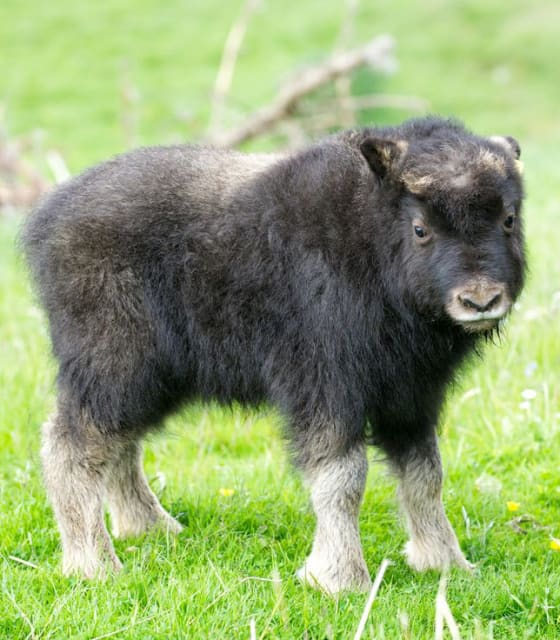
Highland Wildlife Park’s female Musk-ox, Karin, has given birth to the Zoo’s first ever Musk-ox calf. Born on Wednesday, 15 May, little Belle has spent her first few weeks of life off-show with mum, but has now started to venture out into her outdoor enclosure. (via ZooBorns
They’re inside of it. They crawled inside, and now I have a giant incredibly heavy piece of carcass in my yard, with 2 dogs inside of it, and they are not getting bored of it and coming out. One of them is snoring. I have company arriving in three hours, and my current plan is to 1. put up a tent over said carcass and 2. hang thousands of fly strips inside it. This has been going on since about 6:40 this morning— via Robert Burke

A female Baird’s Tapir was born on 2 April at Brevard Zoo. With her mother Josie and father Pewee, she brings the zoo’s tapir count up to three. Mum and baby are doing well, bonding behind the scenes — via ZooBorns

— via Minitokyo

On 29 April, three Snow Leopard kittens were born at the Austria’s Zoo Salzburg — the fourth litter for 11-year-old female Mira and her 12-year-old mate, Shankar — via ZooBorns
Along with their writhing tentacles, octopi and squid sport another interesting feature — they swim not by swishing a tail, but by expelling a jet of water. This allows them to move very quickly and quietly. Scientists from Germany’s Fraunhofer Institute for Manufacturing Engineering and Automation have now copied this system, in a propulsion system that could ultimately find use in boats, recreational watercraft, or submarines.
Known as the Octopus Siphon Actuator, the miniature prototype system consists of four joined 20 x 6cm elastomer balls, each with a hydraulic piston inside. Initially, water is sucked in through an opening in each ball – just as a squid or octopus draws water into its mantle. Cables integrated into the balls then cause them to contract, rapidly expelling the water.
In the same way that the animals steer themselves by moving the funnel that the water comes out of, the Fraunhofer system can also be steered, using a motor to selectively point the balls in the desired direction(s).
The whole apparatus can be fabricated in one step, using a 3D printer. Production could reportedly be scaled up to the point of producing balls measuring two metres across. According to Fraunhofer, not only would a commercial version of the technology allow for fast and near-silent travel, but there would also be no danger of sea creatures being cut by propellers — via redwolf.newsvine.com

— via bird and moon

On 14 January, the Sao Paulo Zoo in Brazil welcomed a new resident, a male baby Oncilla named Poli. (It’s pronounced AWN-sill-uh, by the way.) The cub’s mother, Luiza, is one of the last melanistic Oncilla remaining in captivity today. Melanism is a genetic mutation causing dark pigmentation, so rather than being spotted, Luiza’s coat is entirely black. Despite the mother’s mutation, Poli was born with the more common spotted fur pattern — via ooBorns

A Tuesday afternoon car crash near Belfair left a man and his dog shaken and covered in paint.
Washington State Patrol trooper Russ Winger said the driver was alone with his dog on SR-302 southwest of Belfair when he somehow lost control of his SUV and went off the road just just after 3.00pm.
The man was hauling buckets of paint, which went flying on impact and left the man, his dog and the SUV coated in paint — via redwolf.newsvine.com

Ronja, a two-year-old Arctic Fox at Munich’s Hellabrunn zoo, gave birth to cubs on April 26 in the privacy of her den, but only now – roughly seven weeks later – are keepers and zoo visitors getting their first glimpse of the babies! Initially five cubs had been counted… but then, keepers spotted a sixth! The individual cubs can be identified by the color of their fur – one has white paws, another a white bib, and one is completely grey. It’s still too early yet to know what sex each is. These are the first Arctic Fox cubs to be born in the entire 102 year history of the zoo — via ZooBorns
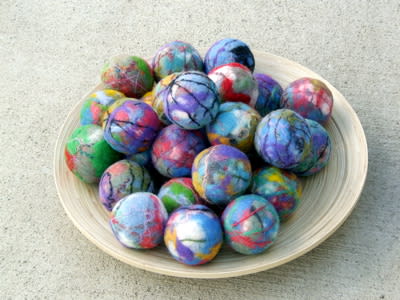
You can make a cute felted cat toy with this easy method of felting. The felted toy is tough and chewy like pretend prey. It also has the hairyness
to give a sense of realism for your kitty… Without the charming hairball after. These are lighter than the full felt construction, easier and faster to make, and have a bell inside for added pleasure. It’s a simple and practical way to recycle small amounts of wool fleece and yarn that will felt — via 7 Yaks Design


 RSS – Posts