Life On Mars from Lukas Vojir on Vimeo.
Short futuristic retro newsreel about colonisation of Mars. I wrote the script, directed, designed, modelled and animated the entire piece. Voice recorded by Alan Baxter.
Life On Mars from Lukas Vojir on Vimeo.
Short futuristic retro newsreel about colonisation of Mars. I wrote the script, directed, designed, modelled and animated the entire piece. Voice recorded by Alan Baxter.
Mudgee Tower from Traces Films on Vimeo.
Commissioned by Rob Brown of Casey Brown Architecture. This film looks at the inspiration, design and construction of this unique and totally sustainable shelter. A beautiful combination where the raw natural materials and elements have created a stylish elegant structure of sophisticated solitude. With a voice-over narration by Rob Brown.
Sometimes, it seems like science deliberately enjoys springing stuff on you. I was reading through a book by a biology professor, describing the insects in the woods around his home, when the book casually mentioned that they knew certain things about the development of moths because they’d performed brain transplants on them. This seemed to me to be a spectacular instance of burying the lede. Insect development is very nice, but brain transplants are far more electrifying.
The entire process seems to have started in 1923, when a biologist named Walter Finkler reported that he had managed to successfully transplant the heads of insects. He’d been working with water boatmen, meal worms, and common butterflies – both in adult and grub form. The transplantation process was not complex. He’d grab two insects, cut off their heads with sharp scissors, and switch them. The fluid that the insects themselves leaked cemented the new heads in place. After a little time — a 1923 article says a few weeks — the insects were healed up and doing whatever their new heads told them to do. Finkler claimed that the heads of female insects on male bodies continued female behavior, and the head of one species of butterfly kept the habits of its own species, even when its body belonged to a different species — via redwolf.newsvine.com

For the first time in its history, Zoo Liberec in the Czech Republic welcomed a litter of Maned Wolf pups to their institution. After a two month gestation, mother Samantha gave birth to four pups back on 10 January. However, after two of the original four litter-mates failed to survive, zoo officials waited to ensure that the second two pups were in good health before announcing the birth to the public — via ZooBorns
An Elmwood Park teen was injured Friday night in what police believe was a self-inflicted shooting, police said.
The 17-year-old boy was in a vehicle with female friends when he was shot at about 7.20pm, according to what he told police, said Chicago Police Department News Affairs Officer John Mirabelli.
The boy was at Loyola Hospital in Maywood with a wound to his left groin area when police were called there at 8.15pm, Mirabelli said.
Initially, the boy told police he was outside on the 3300 block of North Harlem Avenue at 7.20pm when two men dressed in black and wearing Ninja masks jumped out of a black van, said Mirabelli. The boy initially told police at least one of the men had a semi-automatic handgun and shot him, Mirabelli said.
After police received the information, police went to the alleged shooting scene but could not find any evidence of the shooting. In addition, the police interviewed potential witnesses and reviewed surveillance video but failed to find any evidence of the attack, Mirabelli said.
After police returned to the hospital, they confronted the teen with their lack of findings. The boy continued to give conflicting information, Mirabelli said.
Eventually, the boy, who has gang ties, told police he was driving in a vehicle with several female friends when he was playing with a gun and it discharged in his lap and struck him — via redwolf.newsvine.com
Manuel Maia Gomes converted House Antero de Quental, the home of a 19th-Century poet, into a contemporary literary centre in Portugal — via Dornob
Federal librarians and archivists who set foot in classrooms, attend conferences or speak up at public meetings on their own time are engaging in high risk
activities, according to the new code of conduct at Library and Archives Canada.
Given the dangers, the code says the department’s staff must clear such personal
activities with their managers in advance to ensure there are no conflicts or other risks to LAC
.
The code, which stresses federal employees’ duty of loyalty
to the duly elected government
, also spells out how offenders can be reported.
It includes both a muzzle and a snitch line,
says James Turk, executive director of the Canadian Association of University Teachers, which represents more than 68,000 teachers, librarians, researchers and academics across the country.
He and others say the code is evidence the Harper government is silencing and undermining its professional staff — via redwolf.newsvine.com
Body modification enthusiasts may know better than most people what it’s like to be judged on sight for their piercings, tattoos, scars, and other forms of body art.
For Shannon Larratt, the founder of BMEzine, this societal judgment may have cost him the final years of his life.
The 39-year-old writer and publisher, perhaps best known outside his community for ModCon: the Secret World of Extreme Body Modification, died on 15 March of an apparent suicide. On his blog, a letter that he spent months carefully composing was made public after his death. In it, he discusses his deteriorating quality of life due to calcification, a process in which the body replaces soft tissue with calcium deposits, caused by a genetic disease known as tubular aggregate myopathy — via redwolf.newsvine.com
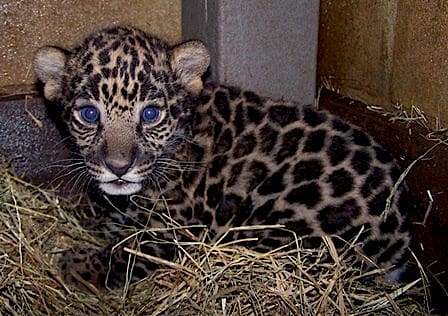
A Jaguar cub was born at Brevard Zoo in Florida on 26 January. The cub, whose sex has not been determined yet, is bonding well with its mother Masaya — via ZooBorns
Bloggers could face high fines for libel under the new Leveson deal with exemplary damages imposed if they don’t sign up to the new regulator, it was claimed on Tuesday.
Under clause 29 introduced to the crime and courts bill in the Commons on Monday night, the definition of relevant
bloggers or websites includes any that generate news material where there is an editorial structure giving someone control over publication.
Bloggers would not be at risk of exemplary damages for comments posted by readers. There is also a schedule that excludes certain publishers such as scientific journals, student publications and not-for-profit community newspapers. Websites are guaranteed exclusion from exemplary damages if they can get on this list.
Kirsty Hughes, the chief executive of Index on Censorship, which campaigns for press freedom around the world, said it was a sad day
for British democracy. This will undoubtedly have a chilling effect on everyday people’s web use,
she said.
She said she feared thousands of websites could fall under the definition of a relevant publisher
in clause 29 — via redwolf.newsvine.com
While Congress is working on legislation to re-legalise cellphone unlocking, let’s acknowledge the real issue: The copyright laws that made unlocking illegal in the first place. Who owns our stuff? The answer used to be obvious. Now, with electronics integrated into just about everything we buy, the answer has changed.
We live in a digital age, and even the physical goods we buy are complex. Copyright is impacting more people than ever before because the line between hardware and software, physical and digital has blurred.
The issue goes beyond cellphone unlocking, because once we buy an object — any object — we should own it. We should be able to lift the hood, unlock it, modify it, repair it … without asking for permission from the manufacturer.
But we really don’t own our stuff any more (at least not fully); the manufacturers do. Because modifying modern objects requires access to information: code, service manuals, error codes, and diagnostic tools. Modern cars are part horsepower, part high-powered computer. Microwave ovens are a combination of plastic and microcode. Silicon permeates and powers almost everything we own.
This is a property rights issue, and current copyright law gets it backwards, turning regular people — like students, researchers, and small business owners — into criminals. Fortune 500 telecom manufacturer Avaya, for example, is known for suing service companies, accusing them of violating copyright for simply using a password to log in to their phone systems. That’s right: typing in a password is considered reproducing copyrighted material
— via redwolf.newsvine.com
A web analytics firm has sniffed out a botnet that was raking in $6m a month from online advertisers.
The so-called Chameleon botnet mimicked human visitors on select websites, causing billions of display ad impressions to be served to compromised machines. As many as 120,000 infected drones have been discovered so far. Almost all of the over 202 websites targeted in the scam are located in the US. In some cases, two-thirds of the websites’ traffic was generated from zombie machines.
All the bot browsers report themselves as being Internet Explorer 9.0 running on Windows 7.
The advertisers cough up a few pennies every time an ad is viewed, and the ad network, ad exchanges and the publisher all take their share.
The malign traffic was difficult to identify because the malware used a hundreds of thousands of different ad-exchange cookies. These characteristics earned the malware behind the scam the Chameleon moniker — via redwolf.newsvine.com
Cyprus’ parliament has rejected a controversial levy on bank deposits, proposed as part of an EU-IMF 10bn-euro (£8.7bn; $13bn) bailout package.
No MPs voted for the bill, with 36 voting against and 19 abstaining.
The finance ministry had modified the package, proposing an exemption for savers with smaller deposits, but opposition had remained fierce.
Thousands of protesters who had filled the streets outside parliament reacted with joy to the news of the vote.
EU finance ministers have warned that Cyprus’ two biggest banks will collapse if the deal does not go through in some form.
However, there has been widespread outrage on the island at the prospect of ordinary savers being forced to pay a levy of 6.75%
The plan was changed to exempt savers with less than 20,000 euros (£17,000), with those over 100,000 euros charged at 9.9%, but this was not enough to placate critics — via redwolf.newsvine.com
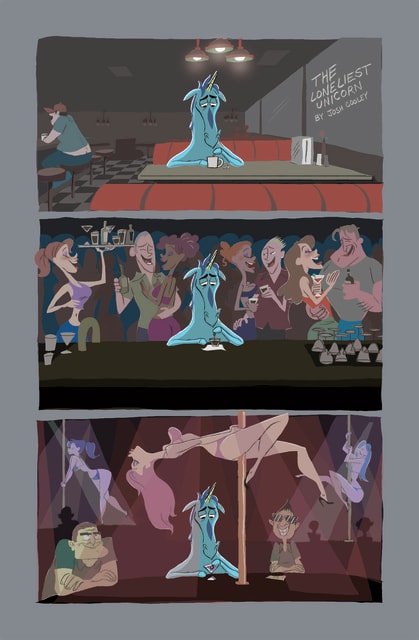
— via COOLEY!
This is a laptop bureau is inspired by laid bare old world mechanical technology reminiscent of late 19th and early 20th Century farm machinery often found rusting in the veld on a typical Highveld farm.
The bureau is designed to open and close using a system of gears, cranks and rack and pinions
In the late 1940s, a professor at the University of Maryland School of Medicine coined an unusual phrase to describe unexpected diagnoses. When you hear hoofbeats behind you, don’t expect to see a zebra,
he said. The phrase stuck and today, medics commonly use the term zebra
to describe a rare disease, usually defined as one that occurs in less than 1 in 2000 of the population.
Rare diseases are inherently hard to diagnose. According to the European Organisation for Rare Disease, 25 per cent of diagnoses are delayed by between 5 and 30 years.
So it’s no surprise that medics are looking for more effective ways to do the job. An increasingly common aid in this process is the search engine, typically Google. This forms part of an iterative process in which a medic enter symptoms into a search engine, examines lists of potential diseases and then looks for further evidence of symptoms in the patient.
The problem, of course, is that common-or-garden search engines are not optimised for this process. Google, for example, considers pages important if they are linked to by other important pages, the basis of its famous PageRank algorithm. However, rare diseases by definition are unlikely to have a high profile on the web. What’s more, searches are likely to be plagued with returns from all sorts of irrelevant sources.
Today, Radu Dragusin at the Technical University of Denmark and a few pals unveil an alternative. These guys have set up a bespoke search engine dedicated to the diagnosis of rare diseases called FindZebra, a name based on the common medical slang for a rare disease. After comparing the results from this engine against the same searches on Google, they show that it is significantly better at returning relevant results — via redwolf.newsvine.com
Debating the futility of war with a member of the military is pointless — it could also earn you a punch in the mouth for your troubles. A large-scale UK study has found young men who have served in the Armed Forces are three times more likely to commit violent crimes compared to their civilian counterparts.
What’s interesting is that the psychological effects of active combat are only partly responsible: put simply, many of these men were aggressively violent to begin with.
Researchers at King’s College London studied the police records of 13,856 randomly selected serving and ex-serving UK military personnel who had been deployed in Iraq and Afghanistan. The study found that 20.7 percent of servicemen under 30 years old had been convicted of a violent crime; compared to 6.7 percent of male civilians in the same age bracket.
Men with direct combat exposure were also 53 percent more likely to commit a violent offence than men serving in a non-combat role.
Curiously, despite committing a higher number of violent crimes, military men were otherwise more law-abiding than the general population — the study found that when all offence categories were lumped together, ex-soldiers had a lower overall crime rate — via redwolf.newsvine.com
Two months ago, perennial optimists were telling us that the worst of the Eurozone crisis was probably over. Then came the Italian election. Now the great Cypriot bank heist.
By Sunday morning it was dawning on tens of millions of people what had happened, as the news spread from the specialist financial commentary to front pages and top television news across the continent.
At one stroke, the Troika of the Eurozone finance ministers, European Central Bank and International Monetary Fund had, with the new right-wing Cypriot government, stolen between 6.7 and 9.9 percent of the money of all depositors in Cyprus’s ailing banks. All in the name of a bank rescue.
When the leading capitalist states moved in 2008 to rescue the banks it was through taking on debt themselves and guaranteeing small and medium deposits in order to prevent a run on the banking system following the collapse of Lehman Brothers. The public, of course, was then to be squeezed in the name of reducing the debt that was now on the public books. Now, nearly five years on, rescue
means direct robbery of the depositor.
It’s as if as the crisis has continued and deepened the capitalist system has become auto-cannibalisitic. What was meant to be sacred — private property and the essential private contractual relationship — has become profaned; not at the hands of some North Korean communist terror
, but by the partisans of re-turbocharging the neoliberal model, which is what the austerity is all about — via redwolf.newsvine.com

With all those arms, he’s just that much easier to hug! This colourful octopus pillow is sure to make you smile. This pillow is hand printed, stuffed, sewn and will make a great addition to any home or the perfect toy for any child — via Etsy
Melbourne’s Crown Casino is working with police and Victoria’s gaming regulator to investigate a betting scam which is believed to have netted a high-rolling cards player $32 million.
A staff member who looks after VIP gamblers has been sacked over the scam and a gambler has been banned from the premises.
The Herald Sun has reported the scam netted the high roller $32 million, but Crown is refusing to confirm that figure.
It is believed the scam involved the use of the casino’s own surveillance system, but Crown is not commenting — via redwolf.newsvine.com


 RSS – Posts