Among living things, the color blue is oddly rare. Blue rocks, blue sky, blue water, sure. But blue animals? They are few and far between. And the ones that do make blue? They make it in some very strange and special ways compared to other colors. In this video, we’ll look at some very cool butterflies to help us learn how living things make blue, and why this beautiful hue is so rare in nature — via Youtube
— via Youtube


- Geometric Pattern: Key Bridge Alternate: Blue (Redbubble | Spoonflower)
- Geometric Pattern: Key Bridge Alternate: Green (Redbubble | Spoonflower)
- Geometric Pattern: Key Bridge Alternate: Yellow (Redbubble | Spoonflower)
- Geometric Pattern: Key Bridge Alternate: Orange (Redbubble | Spoonflower)
- Geometric Pattern: Key Bridge Alternate: Red (Redbubble | Spoonflower)
- Geometric Pattern: Key Bridge Alternate: Purple (Redbubble | Spoonflower)
— by Red Wolf

— via Extra Fabulous Comics
If you’ve ever wondered why your cats put everything under the stove, now is your chance to find out. Don’t look under it yourself or this might happen to you — via Youtube
In this episode of the adventures of Switch & Lever we’re making custom brass plaques, using reasonably simple tools, and some basic chemistry — via Youtube
Jeff Day talks with Mark Sfirri about his unique style of wood turning. Mark’s work has been featured at the Smithsonian Institute’s Renwick Gallery — via Youtube
This is just water applied using an applicator on watercolour paper, but any cartridge paper should work fine, and coloured ink — via Youtube
Seven endangered African painted dog pups have made their first public appearances at Chester Zoo — via Youtube





- Geometric Pattern: Key Serpentine: Blue (Redbubble | Spoonflower)
- Geometric Pattern: Key Serpentine: Green (Redbubble | Spoonflower)
- Geometric Pattern: Key Serpentine: Yellow (Redbubble | Spoonflower)
- Geometric Pattern: Key Serpentine: Orange (Redbubble | Spoonflower)
- Geometric Pattern: Key Serpentine: Red (Redbubble | Spoonflower)
- Geometric Pattern: Key Serpentine: Purple (Redbubble | Spoonflower)
— by Red Wolf
BBC News reporter Alex Dunlop found himself mobbed by lemurs while trying to report on an animal count at Banham Zoo in Norfolk — via Youtube
A rusty spotted cat, the world’s smallest cat, explores his forest home in Sri Lanka, but his natural curiosity is destined to get him into a spot of trouble — via Youtube
The displays are Alfa Zeta 7 segment displays from www.flipdots.com. There are 28 coils total on the board between the relays and the digits which are being driven by an ESP32 and and two NXP MC33996’s — via Youtube




- Geometric Pattern: Key Bridge: Blue (Redbubble | Spoonflower)
- Geometric Pattern: Key Bridge: Green (Redbubble | Spoonflower)
- Geometric Pattern: Key Bridge: Yellow (Redbubble | Spoonflower)
- Geometric Pattern: Key Bridge: Orange (Redbubble | Spoonflower)
- Geometric Pattern: Key Bridge: Red (Redbubble | Spoonflower)
- Geometric Pattern: Key Bridge: Purple (Redbubble | Spoonflower)
— by Red Wolf

Every hardcore band you loved in the ’80s and beyond, from Black Flag to Minutemen to Fugazi, had one unfortunate thing in common: Nazi skinheads occasionally stormed their concerts, stomped their fans, gave Hitler salutes in lieu of applauding, and generally turned a communal experience into one full of hatred and conflict. Punk rockers had flirted with fascist imagery for shock value, with the Sex Pistols’ Sid Vicious and Siouxsie Sioux wearing swastikas in public, but, as early San Francisco scenester Howie Klein, later president of Reprise Records, recalls: Suddenly, you had people who were part of the scene who didn’t understand
fascist bad.
By 1980, a more violent strain of punk fans was infecting punk shows. Pogoing became slam-dancing, now known as moshing, and some of ’em didn’t seem like they were there to enjoy the music, as much as they were there to beat up on people — sometimes in a really chickenshit way,
says Jello Biafra, whose band, Dead Kennedys, put out a classic song about it in 1981: Nazi Punks Fuck Off
— via GQ
For the first time in Saint Louis Zoo history, a cheetah has given birth to eight cheetah cubs. The cubs, three males and five females, were born at the Saint Louis Zoo River’s Edge Cheetah Breeding Centre on 26 November, 2017. Mother and cubs are doing well and will remain in their private, indoor maternity den behind the scenes at River’s Edge for the next several months — via Youtube
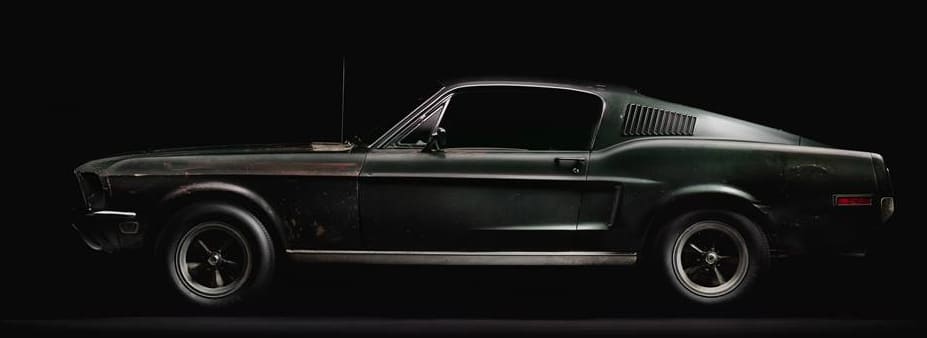
Steve McQueen made one last effort to buy his favourite Mustang in 1977. He sent a letter, typed on a single piece of heavy off-white vellum, to the car’s owner in New Jersey. The logo for his movie company, Solar Productions, was embossed in the upper left corner and opposite that resided the date, 14 December 1977. The letter is just four sentences.
Again,
it begins, I would like to appeal to you to get back my ’68 Mustang.
McQueen offered no specifics as to why this particular Ford was important to him, except to say that he wanted to keep it unrestored and that it was simply personal with me
.
McQueen’s star may have dimmed by 1977, but he remained an icon, a rare actor loved by both genders. McQueen was also one of us, an aficionado and a racer, someone who understood the instinctual joy of automobiles and motorcycles and indulged in both. And with that ’68 Mustang, McQueen gave us a gift, one of the greatest car chases ever filmed, a duel with a Dodge Charger up, down, and around San Francisco. The Bullitt chase is coveted for the usual crashes and jumps, but it had something more: Unlike most cinematic chases that feature cars performing impossible feats, the one from Bullitt was every bit as exciting, but the driving was obviously real. Those who know cars knew. It’s 10 minutes of film nirvana. McQueen wanted the Bullitt Mustang back.
The rich and famous are often allergic to the word no
, and so was McQueen. His impatience over being rebuked in his quest emerged in the last sentence: I would be happy to try to find you another Mustang similar to the one you have, he wrote, if there is not too much monies involved in it. Otherwise, we had better forget it.
The owner was just fine with forgetting it, and then the Bullitt Mustang made an exit, stage left, from recorded history — via Hagerty


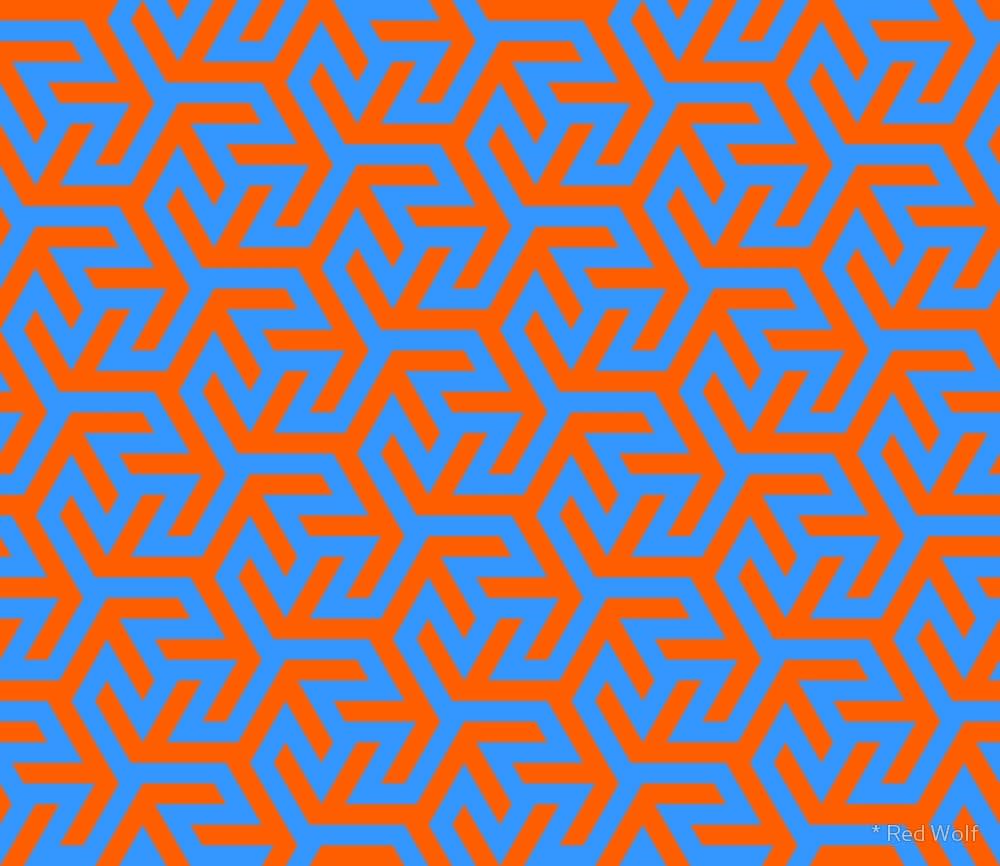


- Geometric Pattern: Triskelion Fork: Blue (Redbubble | Spoonflower)
- Geometric Pattern: Triskelion Fork: Yellow (Redbubble | Spoonflower)
- Geometric Pattern: Triskelion Fork: Blue/Orange (Redbubble | Spoonflower)
- Geometric Pattern: Triskelion Fork: Blue/Green (Redbubble | Spoonflower)
- Geometric Pattern: Triskelion Fork: Navy/Pink (Redbubble | Spoonflower)
— by Red Wolf


95th Rifles originally uploaded by Red Wolf


 RSS – Posts