

A quirky and stylish centrepiece to add some aquatic flair to your Hanukkah celebrations — via Etsy

DIY has a posted a pattern that shows you how to make your own Giant Squid Pillow. Completed, it’s eight feet long which is sofa-sized — via Laughing Squid

An unknown number of homes have been lost as New South Wales suffers one of its worst bushfire days in years.
Emergency warnings have been issued for bushfires burning out of control near Lithgow, Wollongong, Newcastle, Muswellbrook, Wyong and the Blue Mountains.
Rural Fire Service Commissioner Shane Fitzsimmons says if we get through with less than 100 homes destroyed today, we have been lucky
.
Total fire bans are in place until midnight for areas including Greater Sydney, plus the Central Ranges, North Coast and North Western districts.
The weather bureau has forecast temperatures will hit the mid-30s and that wind gusts could reach up to 90 kilometres per hour — via redwolf.newsvine.com
Australian scientists have created a customized set of purple titanium shoes for a Melbourne race horse using 3D printing.
The horse, nicknamed Titanium Prints
, had its hooves scanned with a 3D scanner.
Using 3D modelling software, scientists from the Commonwealth Scientific and Industrial Research Organisation (CSIRO) then used the scan to design the racing shoe.
CSIRO’s Titanium expert John Barnes says it takes less than 24 hours to print four customised shoes for a horse and it costs approximately $600 for all of them — via redwolf.newsvine.com

At Zoo Basel in Switzerland, an Indian Rhinoceros gave birth during the night on 5 October. The calf, a boy, was given the name Kiran, a Hindi word for sunrise
. Kiran is nursing well and bonding well with his mother, 31-year-old Ellora. On his first day, Kiran weighed 68 kg and stood just over 66 cm tall — via ZooBorns

Designer Eugeni Quitllet was hired by Air France to redesign the airline’s in-flight cutlery and tableware. And as part of the new line, he went above and beyond the call of duty with a set of cutlery designed just for kids that transforms into a small airline of their own — via Gizmodo Australia
Last week, the nation’s capital was host to Value Voters 2013 Summit, a three-day political conference for predominantly religious conservatives. Among the smattering of social and economic issues at hand, the overall tenor of the Summit focused on eliminating Obamacare, expanding the tangible presence of Christianity through the public arena and military and preventing the proliferation of easily available birth control and abortion. In speeches, lunches and breakout sessions, American’s Christian Right worked out strategies to bring the values of the federal government in line with their preferred Christian ethical dictates, using democracy as their chief tool.
It isn’t unusual for Christians living in democracies to use the vote to express their ethics, and to shape government to do the same. That the moral and ethical preferences of a given society should inform government is a foundational principle of democracy, after all. And American values voters are far from the first Christians to undertake the project of bringing their government’s policies in line with Christian ethics: European Christian parties have aimed to do the same for decades. But between American Christian voters and their European counterparts, a curious departure opens up: while European Christians generally see the anti-poverty mission of Christianity as worthy of political action, the American Christian Right inexplicably cordons off economics from the realm of Christian influence.
By all means, the American Christian Right is willing to leverage government authority to carry out a variety of Christian ethical projects, especially within the arena of family life. Michele Bachmann would make abortion illegal, and Rick Santorum has stated on multiple occasions that he supports laws against homosexual intercourse. But Christian politicians in the United States curtail their interest in making the gospel actionable when it comes to welfare. While the government should see to the moral uprightness of marriage, sex and family, the Value Voters 2013 Summit was notably bereft of talks on living wages, labor rights or basic incomes.
The notable exclusion of poverty from the Christian agenda would doubtlessly puzzle European Christians, whose support of Christian ethical approaches to family life have always been paired with a deep and vigorous concern for the poor. And, unlike their American counterparts, European Christians haven’t been willing to leave poverty up to individual charity or the market to handle. Quite the contrary: Just as public morality is an arena fit for intervention by a Christian-informed government, so too is welfare — via redwolf.newsvine.com

— via deviantART
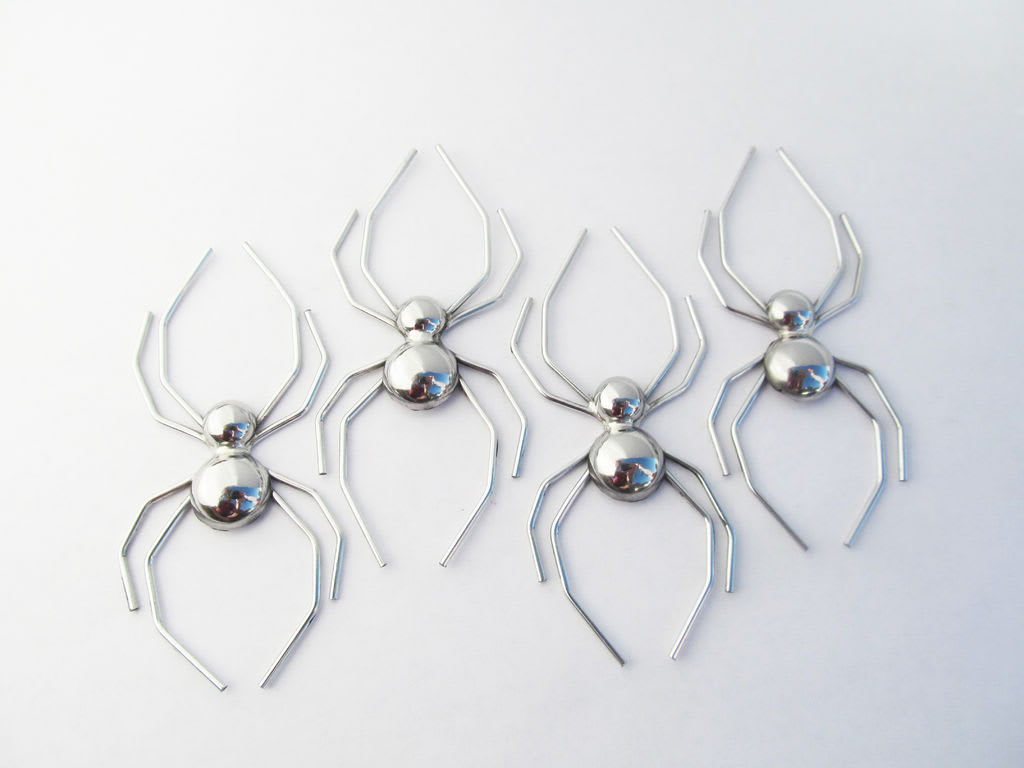
I made these spiders because refrigerators like Halloween too. They add a finishing touch to colouring pages of jack-o-lanterns and spooky ghosts. Each spider has a 1/2” neodymium disc magnet in its abdomen. I made them from 22 gauge sheet metal and 16 gauge wire — via Instructables

If you fancy making something out of an iconic cloth, you should check out the Underground range byKirkby Design, which offers fabrics used on London Underground carriages in the middle of the 20th century — via Retro To Go

— via deviantART

Greater Poland Voivodeship — via deviantART

This is a full headed helm along with an inner flap where a pelt can be attached — via deviantART

Norway’s got a major corpse problem that isn’t going away anytime soon. Literally — they won’t rot. What’s the culprit behind this profusion of bodies that refuse to take their place in the circle of life? The same thing that’s also working to keep your sandwich fresh: plastic wrap.
For three decades following World War II, Norway’s burial practices involved wrapping their dead nice and tight in a layer of plastic before setting them into wooden coffins for the Big Sleep. Apparently, they believed it to be more sanitary. Hundreds of thousands of burials later, though, Norwegian funeral directors have found themselves in a bit of a tight spot. These non-rotting corpses are squatting on prime burial spots, leaving the newly deceased high and (figuratively) dry.
For smaller countries like Norway and a few other European states, land is a scarce commodity, so 20 years after a Norwegian is first buried, their plot opens up to let in a new inhabitant (unless the bereaved want to pay an annual fee to keep their loved ones roommate-free). With about 350,000 plastic-filled graves and politicians unwilling to give any extra land to the dead, one former graveyard worker, Kjell Larsen Ostbye, may have found the solution.
By relying on what he remembered from a past chemistry class, Ostbye came up with a technique for poking holes into the ground and through the plastic wrap, allowing him to inject a lime-based solution that would rapidly accelerate the decomposition process to no more than a year. It’s more than just being a great idea — it actually works. Ostbye has already treated over 17,000 Norwegian graves (which takes about 10 minutes each) in multiple cities, earning him about $US670 per plot — via redwolf.newsvine.com
Scientists have hailed an historic turning point
in the search for a medicine that could beat Alzheimer’s disease, after a drug-like compound was used to halt brain cell death in mice for the first time.
Although the prospect of a pill for Alzheimer’s remains a long way off, the landmark British study provides a major new pathway for future drug treatments.
The compound works by blocking a faulty signal in brains affected by neurodegenerative diseases, which shuts down the production of essential proteins, leading to brain cells being unprotected and dying off.
It was tested in mice with prion disease — the best animal model of human neurodegenerative disorders – but scientists said they were confident the same principles would apply in a human brain with debilitating brain diseases such as Alzheimer’s or Parkinson’s.
The study, published today in the journal Science Translational Medicine, was carried out at the Medical Research Council’s (MRC) Toxicology Unit at the University of Leicester — via redwolf.newsvine.com
I hate Microsoft Word. I want Microsoft Word to die. I hate Microsoft Word with a burning, fiery passion. I hate Microsoft Word the way Winston Smith hated Big Brother. Our reasons are, alarmingly, not dissimilar …
Microsoft Word is a tyrant of the imagination, a petty, unimaginative, inconsistent dictator that is ill-suited to any creative writer’s use. Worse: it is a near-monopolist, dominating the word processing field. Its pervasive near-monopoly status has brainwashed software developers to such an extent that few can imagine a word processing tool that exists as anything other than as a shallow imitation of the Redmond Behemoth. But what exactly is wrong with it? — via redwolf.newsvine.com

This brooch I made of beaded embroidery technique. Embroidery is on the base (Lacy’s Stiff Stuff), were used Japanese TOHO beads nad Miyuki Delica in grey, gold, beige and black colours. Death’s-head is the skull of glass. Lined in Alcantara — via Etsy
Research conducted at the University of Sydney has delivered photonic chips that slow down light, creating the ability to produce a single photon of light with increased reliability, which allows for more scalable and smaller optical hardware.
The research is published in the Nature Communications journal, with the team responsible made up of members from Macquarie University, the University of St Andrews, the University of York, and the Australian Research Council Centre of Excellence for Ultrahigh Bandwidth Devices for Optical Systems (CUDOS) based at the University of Sydney, as well as the Australian Defence Science and Technology Organisation (DSTO).
It is easy for us to generate photons at high rates, but it’s much harder to ensure they come out one by one, because photons are gregarious by nature and love to bunch together,
said lead author of the research article Matthew Collins, a PhD student at CUDOS.
For that reason, the quantum science community has been waiting over a decade for a compact optical chip that delivers exactly one photon at a time at very high rates
— via redwolf.newsvine.com


 RSS – Posts