
Hughes Industries 1939 — Rocketing into the Future! — via Richard Kadrey’s Damn Tumblr

British photographer Jason Sheldon has won a settlement of £20,000 (about $32,300 US) over a stolen image of his, after initially being offered less than one percent of that.
The dispute centred around a backstage photo Sheldon captured in July of 2011 of pop star Ke$sha partying with rap duo LMFAO. Daybrook House Promotions grabbed the image and used it in an ad last year for a Nottingham nightclub, reasoning that since the picture had been posted on Tumblr, it must be free to reuse at will.
Sheldon tried to explain that copyright doesn’t work that way and sent the company an invoice for £1,351 ($2,200). In response, Daybrook said they never would have used the image if they had realized it was not free to use, and therefore would pay him only £150 ($242).
Instead of accepting that paltry offer, Sheldon decided to take the case to court, and after several rounds of preliminary judgements that went the photographer’s way, Daybrook agreed to an out-of-court settlement of £20,000 — via redwolf.newsvine.com

— via deviantART

Jason Freeny does it again with his latest toy dissection of one of the most nostalgic medical games of our childhood, Operation. In production since 1965, Operation tests a players’ steady hand as they attempt to pick out iconic ailments and anatomical parts without buzzing and setting off Cavity Sam’s red nose. Jason recreated the game board and replaced Cavity Sam’s fake innards with real anatomy. Not such an easy game anymore huh? — via Street Anatomy
Carn – Jeff Le Bars from Jeff Le Bars on Vimeo
Réalisation: Jeff Le Bars
Musique et Sound Design: Sylvain Livenais
Film de fin d’études réalisé à l’école Emile Cohl de Lyon en 2012

Artist Derek Yaniger created this adorable tiki-style illustration featuring Elvira hanging out in a graveyard full of zombies. He only made 80 of these great prints that are even autographed by Elvira herself — via Neatorama
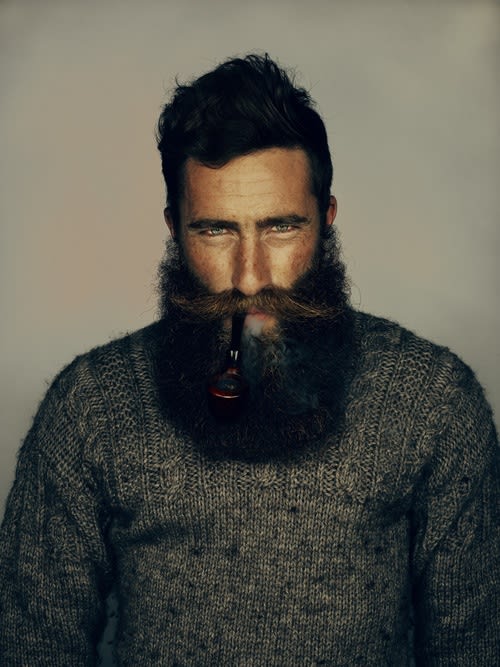
Meet Mr Jimmy Niggles, an Aussie with a craft of a grizzly bear. Portrait photographer Mr Elbank, along with the rest of his portraits, shot Jimmy and his beard Barry
bringing out every blemish and freckle with a unique use of lighting. Not only was I impressed with the photography, but I know every girl wants that big grizzly bear to cuddle up to during these winter months. The story behind his beard is that back in 2009, a dear mate of Jimmy’s found a mole on his neck that turned out to be melanoma. A few months later he tragically passed away. Since then, Jimmy’s and his mates started Beard Season and he has been growing his beard ever since. Check out Jimmy’s site This is Beard — via Trendland


etall: Kindly consider voting for me — via Wil Wheaton

Peter Root’s Ephemicropolis
, a city of staples — via Wil Wheaton

Cyanide & Happiness #3111 – — via Explosm.net

Colonne Morris dans le brouillard. Paris, France, circa 1933. Photograph by Brassaï — via Wil Wheaton

— via DOGHOUSE
Inner Sydney’s Carriageworks art and performance space will double in size, after being granted a 12-month lease by the New South Wales government.
Housed in former rail yards in Redfern, the lease allows for an expansion which will add 5,000 square metres to the existing premises.
The announcement will cement Carriageworks as one of the largest multi-arts centres in Sydney, becoming a strong urban rival to the Sydney Opera House.
Carriageworks director Lisa Havilah says the extra space was desperately needed after two years of strong growth in audience and visitor numbers — via redwolf.newsvine.com
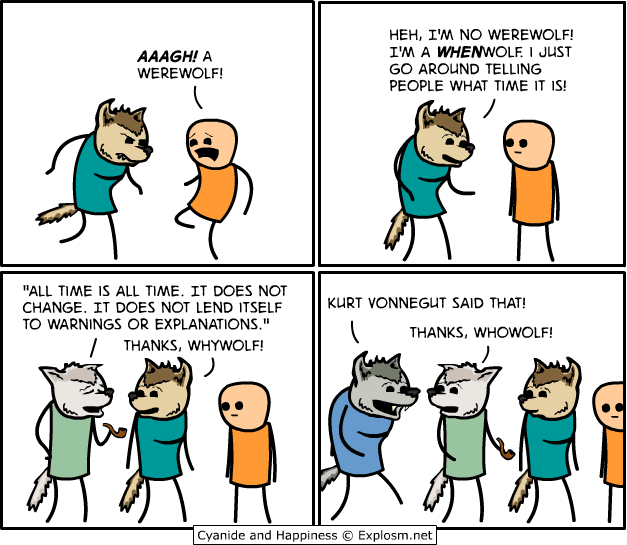
— via Cyanide & Happiness
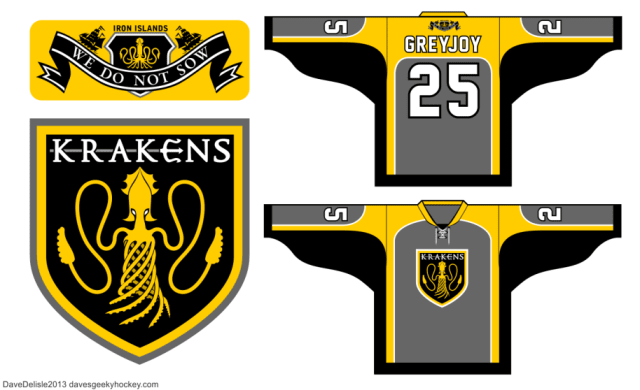
There’s a small contingent of House Greyjoy fans who’ve been asking me to make a design for their favourite house this past year, and I am happy to finally oblige their requests! I present the Iron Island Krakens (or Greyoy Krakens) — via Dave’s Geeky Hockey
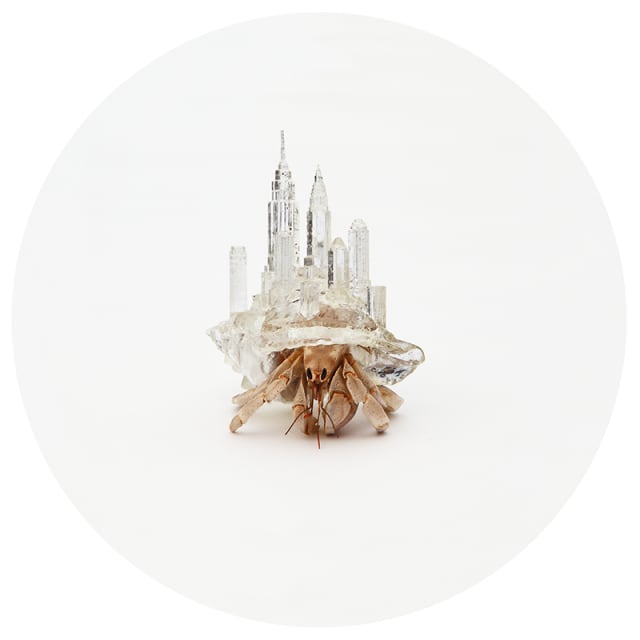
Hermit crabs carry crystal-clear cityscapes on their backs, thanks to a series of 3D-printed shells by Aki Inomata. The artist scans the insides of hermit crab shells to ensure a perfect fit, and then prints skylines of cities like New York, Thailand and Greece in plastic using a high-accuracy 3D printer — via WebUrbanist

— via Invisible Bread


— originally uploaded by Red Wolf


 RSS – Posts