
Cute little baby Nautilus — via Etsy
Cute little baby Nautilus — via Etsy
Housed in the 600,000 square-foot former International Shoe Company, City Museum in St Louis, Missouri, is an eclectic mixture of children’s playground, funhouse, surrealistic pavilion, and architectural marvel made out of unique, found objects. At one time, these were chutes in a factory for sending shoes down to lower floors — via Neatorama
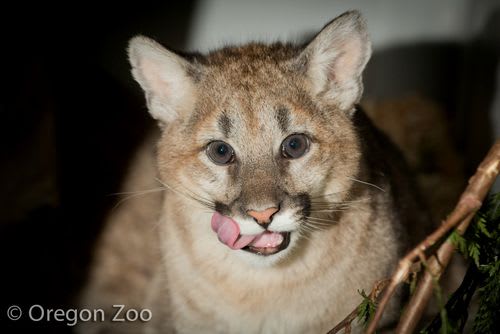
A pair of young Cougar cubs found orphaned and starving near Missoula, Montana briefly took up residence at the Oregon Zoo before being transferred to a new, permanent home at Tennessee’s Chattanooga Zoo — via ZooBorns
The W3C has ruled DRM in-scope for their HTML standard. A lot of big businesses have supported advancing the Encrypted Media Extension, including Google, Microsoft, and Netfix. The BBC calls for a solution with legal sanctions. The EME could well be used to implement a DRM HTML engine. A DRM-enabled web would break a long tradition of the web browser being the User’s Agent, and would restrict user choice and control over their security and privacy. There are other applications that can serve the purpose of viewing DRM video content, and I appeal to people to not taint the web standards with DRM but to please use other applications when necessary — via Slashdot
A new tool has been developed that can reconstruct long-dead languages.
Researchers have created software that can rebuild protolanguages — the ancient tongues from which our modern languages evolved.
To test the system, the team took 637 languages currently spoken in Asia and the Pacific and recreated the early language from which they descended.
The work is published in the Proceedings of the National Academy of Science — via redwolf.newsvine.com
Archaeologists in Peru say they have discovered a temple at the ancient site of El Paraiso, near the capital, Lima.
Entry to the rectangular structure, estimated to be up to 5,000 years old, was via a narrow passageway, they say.
At its centre, the archaeologists from Peru’s Ministry of Culture found a hearth which they believe was used to burn ceremonial offerings.
With 10 ruins, El Paraiso is one of the biggest archaeological sites in central Peru.
The archaeologists found the structure, measuring 6.82m by 8.04m, in the right wing of the main pyramid — via redwolf.newsvine.com
Scientists have reported on the bizarre sex life of a sea slug that discards its penis after copulation, and then grows a new one.
Dubbed Chromodoris reticulata in Latin, the red-and-white slug — technically a shell-less mollusc — inhabits warms waters in South East Asia.
No other animal is known to repeatedly copulate using such ‘disposable penes’,
Japanese biologists wrote in the Royal Society journal Biology Letters, describing the behaviour as extremely peculiar
.
The critter needs 24 hours between couplings to unroll an internally coiled and compressed juvenile penis to replace the used, external organ, scientists found.
It can repeat this feat at least three times — via redwolf.newsvine.com
A Montana television station’s regular programming was interrupted by news of a zombie apocalypse.
The Montana Television Network says hackers broke into the Emergency Alert System of Great Falls affiliate KRTV and its CW station Monday.
KRTV says on its website the hackers broadcast that dead bodies are rising from their graves
in several Montana counties.
The alert claimed the bodies were attacking the living
and warned people not to approach or apprehend these bodies as they are extremely dangerous
.
The network says there is no emergency and its engineers are investigating — via redwolf.newsvine.com
On 9 November 2012, Bristol Zoo welcomed two very special new additions. Shiva, our Asiatic lioness, gave birth to two male lion cubs called Kamran and Ketan. This was an incredibly important event for this critically endangered species — via Bristol Zoo

The Oktopus toilet plunger is a concept design developed by Art. Lebedev Studio that makes it look like a large tentacled creature is emerging from your toilet — via Laughing Squid
The YahooXtra email service is the victim of two separate, but potentially related malicious
attacks, Telecom has said.
The security breach, which began on Saturday morning, saw emails sent to everyone on users’ contact list, asking them to click on a link directing them to an online advertisement.
Telecom responded in a statement issued this afternoon, saying the attacks were believed to have similarly affected other Yahoo mail users using Yahoo servers — via redwolf.newsvine.com
There’s an unspoken pact scientists make with the public. In the same way that doctors and police are held by law and by honour to tell the truth and protect, a scientist is entrusted with performing research with integrity and transparency. The research is carried out, the process painstakingly recorded in laboratory books. The results are scrutinised by peers, often repeatedly, until the work is published in a journal, where readers trust that the work is done accurately and without disguise.
Publications are the key to science: they are a public acknowledgement and record of what has been done and how it can be repeated by other scientists. This ability to replicate is the key to truth and integrity: if the results can be replicated, they are valid. A new fact, a new discovery, has been made.
Given the importance of validation and publication, you would think access to this vital, new information would be relatively easy. Scientists ought to be shouting their discoveries from the rooftops. And they are? — ?but they’re also often paying to publish their own work behind a paywall.
In practice, the information in peer-reviewed publications is not freely available to the public. It’s not even freely available to other scientists. Journals have been around for hundreds of years but in the last quarter of the 20th century, academic publishing increased exponentially. The costs used to come from the physical processes of typesetting, printing and binding but access is now primarily electronic. Our largest databases are now closing in on 50 million articles and a library like that isn’t just a wealth of knowledge? — it’s a wealthy profit source, too — via redwolf.newsvine.com

By 12 January, Nashville Zoo Animal Care Staff had waited over 13 months for the arrival of the Zoo’s second Baird’s Tapir in two years. Soon after the calf’s delivery it became clear that something was wrong.
The baby’s embryonic sac did not break, so he could not breathe and began to rapidly lose vitality. Zoo staff made the decision to intervene and moved mother Houston out of the stall. They then freed the baby from the sac, verified he still had a heart rate, and immediately cleared his airways and performed mouth-to-nose resuscitation until he was fully breathing on his own. Thanks to their heroic efforts and quick action, the calf is doing well — via ZooBorns
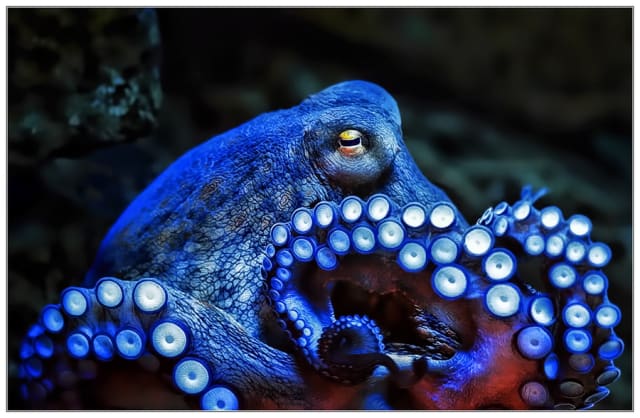
Photo Credit: Klaus Wiese
— via 500px

Arctic Fox #2, originally uploaded by Pat’s Pics36.

18 September 1961. New York. Helena Rubinstein, 655 Fifth Avenue. Hair dryers.
This looks as regimented as anything the Army had to offer, although I do spy one nonconformist wearing flats. Photo by Samuel H Gottscho — via Shorpy Historical Photo Archive
It’s a bird. It’s a plane. No, it’s Hello Kitty.
That’s what a seventh grade student from California had in mind when she came up with her dream science project: sending a Hello Kitty doll her dad brought back from a business trip in Japan into space.
Lauren Rojas, a 12-year-old from Antioch, California, got the idea after seeing a television commercial in which a balloon was launched into the sky. She thought she could do the same with her Hello Kitty doll. She would test air pressure and temperature at high altitude for her school’s science fair — via redwolf.newsvine.com
A wolf hunt in Sweden that had angered environmentalists has been suspended, just days after it began.
The Swedish government had authorised what it called a targeted cull, saying it would create a healthier wolf population.
But it was suspended pending a full legal review after conservationists appealed to the courts.
Hunters killed three out of the 16 wolves allowed under the quota before the cull was called off — via redwolf.newsvine.com
This material, developed by AIST, is an organic substance where the adhesion strength can be varied repeatedly. This is achieved simply by shining light on the material, without heating or cooling it.
When the material has solidified, it’s yellow, but if it’s illuminated with UV light, it gradually liquefies and becomes orange. If you shine green light on the material, it hardens again, and reverts to yellow. This is the first example of a solid-liquid transition caused by light alone, deliberately and reversibly, in a single substance — via redwolf.newsvine.com


 RSS – Posts