Design

Multi-blade Folding Knife / John Holler

Behold the Mother of All Swiss Army Knives, a multi-tool created by John S Holler in Germany around 1880. The knife actually pre-dates the Swiss Army Knife, which started production about a decade later in 1890.

The knife has 100 functions, including every types of blades imaginable. It has a serrated blade, dagger blades, shears and scissors, an auger, a corkscrew, saws, a lancet, button hook, cigar cutter, pens and pencils, mirror, and straight razor. You can even use this tool to tune a piano, as it has a piano tuner built in. Hungry? It’s got a butter knife so you can butter your toast.

But that’s not all: This is a knife you can actually bring to a gunfight. It has a fully functioning .22 calibre five-shot pin-fire revolver. And as if that ain’t enough, the tortoise shell handle covers of the knife open up to hold picks, tools, and even mini folding knives — via Neatorama

Photo: Smithsonian Institution, National Museum of American History, Kenneth E Behring Centre. Catalogue Number 1986.0101.03

Design

180 Years of Inventions / Jaeger-LeCoultre

Jaeger-LeCoultre presents the 180th Anniversary Film with a narrative voice of Clive Owen, actor and a friend of the brand.

180 years have passed since Antoine LeCoultre founded the Manufacture with all crafts under one roof in the Vallee de Joux in Switzerland.

Since 1833, creations by Jaeger-LeCoultre have been laying milestones in the history of Fine Watchmaking: the Atmos clock, the iconic Reverso watch…

Born in the Vallée de Joux, these unique creations encapsulate the expertise of the men and women of the Manufacture guided by the enduring quest for excellence, and yet this is only the beginning — via Youtube

Design

Float Table / Rock Paper Robot

The Float table is a matrix of magnetised wooden cubes that levitate with respect to one another. The repelling cubes are held in equilibrium by a system of tensile steel cables. It’s classical physics applied to modern design. Each handcrafted table is precisely tuned to seem rigid and stable, yet a touch reveals the secret to Float’s dynamic character.

RPR Float Table from RockPaperRobot on Vimeo

Design, Wildlife

Octopus Chandelier / Mason Parker

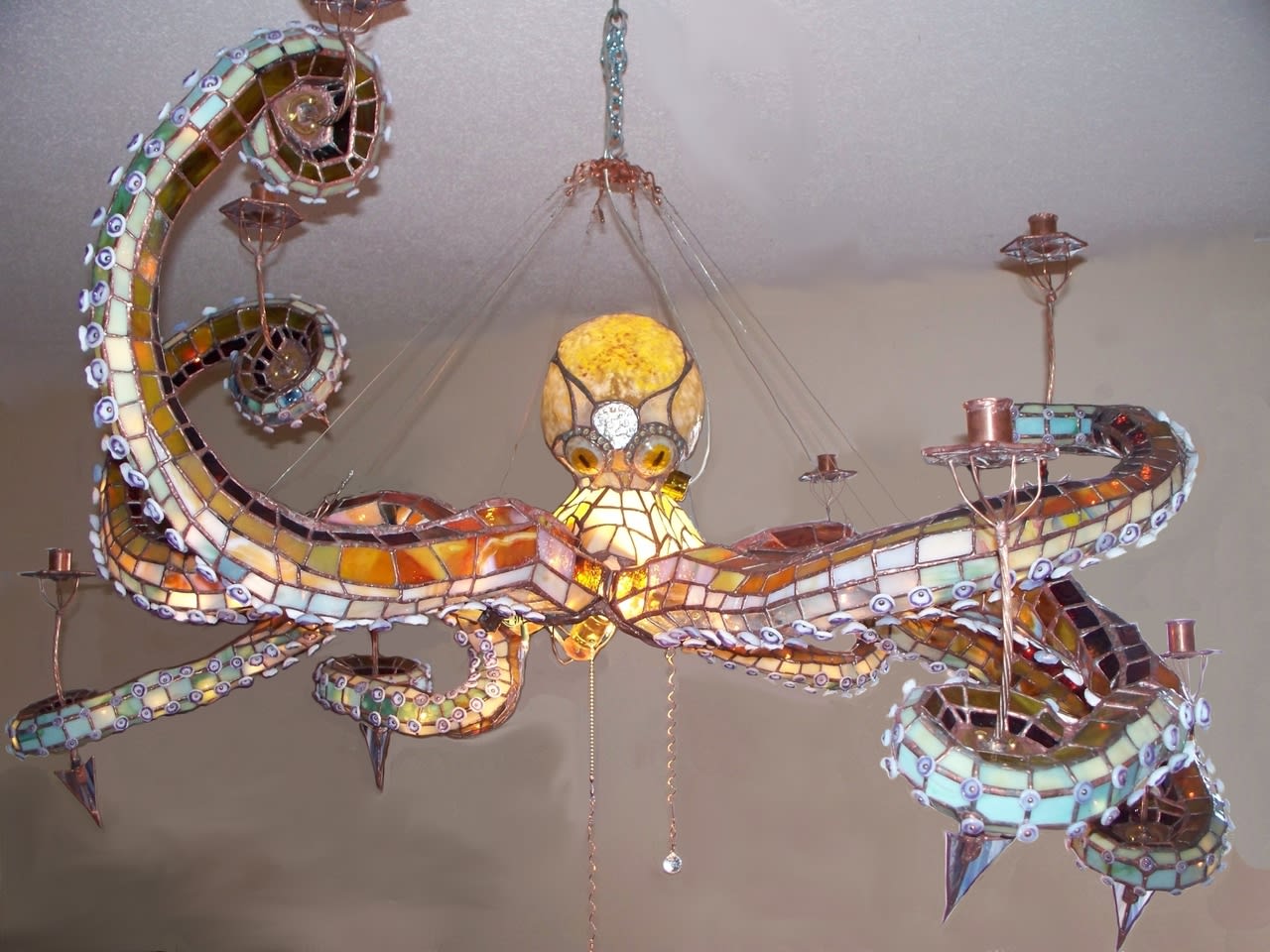
Triple purpose… main lamp, soft light, candlelight, or any combination. This lamp measures approximately 4′ across. Each detachable tentacle has lights inside and would be about 30? long if you stretched it out straight. Recently SOLD, but I am making another soon. $18,000 — via Mason’s Creations

Steampunk Computer / steamworker

Steampunk Computer / steamworker

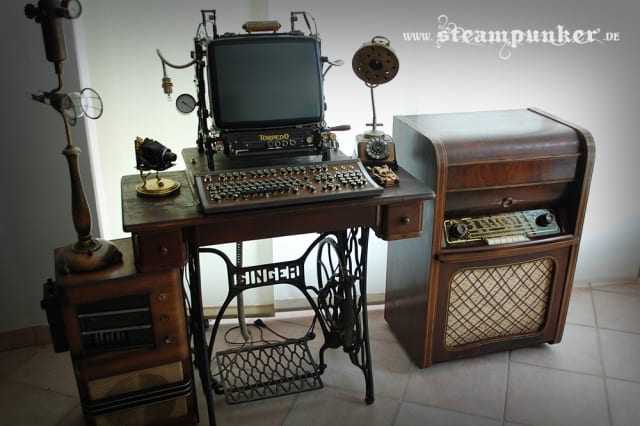
Fully working Steampunk workstation consisting of a computer table, a computer, a monitor, a wireless keyboard and a wireless mouse. The table was build from an old Singer sewing machine. The wood was completely reapplied (the patina retained). Three compartments provide storage space for small items. The PC was installed in an old wooden radio cabinet — via deviantART

Iconic Case Study Houses Finally Reside on National Register

At long last the Los Angeles Conservancy‘s effort to get a set of homes in the region included on the National Register of Historic Places has paid off, with the announcement that 11 of the Case Study Homes are deemed historically significant.

Ten of the homes have been placed on the list, according to the Conservancy. The 11th home did not get put on the list despite eligibility because of owner objection. All of them will enjoy equal preservation protections under the California Environmental Quality Act (CEQA), says the Conservancy.

The Case Study program grew out of a post-WWII discussion of the future of architecture as a new era of building dawned. The idea was to create affordable, well-designed Mid-Century Modern homes for American families (of course, putting many in fancy neighbourhoods ensured the average Angeleno wasn’t likely to ever call one home, alas).

Not all the planned homes were built, and the program didn’t spring forth a gush of mass-produced affordable houses from the prototypes, but it did give architecture wonks and admirers much to love over the years. Most iconic is probably Case Study House #22, the Stahl house, designed by Pierre Koenig, which is oft-photographed — via redwolf.newsvine.com

Design

Disney Concert Hall / Frank Gehry

but every now and then it’s worth taking a minute to acknowledge things that are big and great and self-evidently big and great. like, for example, gehry’s disney concert hall.

i mean, i don’t know if this would be considered hyperbole, but i think it’s one of the greatest buildings conceived of/designed/built in the last 100 years. i know, that’s saying something. well, to be clear, it’s saying that gehry’s disney concert hall is amazing. which it is — via moby los angeles architecture

Design

Synagogue for the Arts / William Breger

i could go take a picture of the seagram’s building or the chrysler building, but i figure i’d rather search out something a little bit weirder. and today’s building is one of my favorite odd-ball buildings in nyc. it’s tribeca’s synagogue for the arts, as designed by William Breger (who was a student of Walter Gropius, the bauhaus bigwig) — via moby los angeles architecture