Hidden Burmese Spitfires to be excavated

Dozens of rare Spitfire fighter planes buried in Burma during World War II are to be dug up under an agreement between the Burmese government and a British aviation enthusiast.

The iconic single-seat aircraft are believed to have been hidden unassembled in crates by the former colonial power to prevent them falling into Japanese hands almost seven decades ago.

Local businessman Htoo Htoo Zaw, who is involved with the project, says the excavation is expected to take about two years — via redwolf.newsvine.com

Breakthrough in world’s oldest undeciphered writing

The world’s oldest undeciphered writing system, which has so far defied attempts to uncover its 5,000-year-old secrets, could be about to be decoded by Oxford University academics.

This international research project is already casting light on a lost bronze age middle eastern society where enslaved workers lived on rations close to the starvation level.

I think we are finally on the point of making a breakthrough, says Jacob Dahl, fellow of Wolfson College, Oxford and director of the Ancient World Research Cluster — via redwolf.newsvine.com

First-time Berkhamsted metal-detector finds one of UK’s largest Roman coin hoards, worth £100,000

A first-time treasure hunter is behind one of the largest Roman gold coin hoards ever discovered in the UK — thought to be worth £100,000.

National newspapers reported on Wednesday that the man, from Berkhamsted, had been sold a beginner’s metal detector from the town’s High Street-based Hidden History for £135.

He is reported to have gone back with 40 of the solidi coins, dating to the last days of Roman rule in Britain, and asked: “What do I do with this?”

Shop owners David Sewell and Mark Becher reported the find, and then joined a search party on the private land where the coins had been discovered.

The group found 119 more coins on the site to the north of St Albans. The last assignment of these coins to reach Britain arrived in AD 408 — via redwolf.newsvine.com

Chuck Yeager Reenacts Historic Sound Barrier Flight

Sixty-five years after becoming the first human to fly faster than the speed of sound, retired Air Force Brigadier General Chuck Yeager is still making noise.

The 89-year-old Yeager, who was featured in the movie The Right Stuff, flew in the back seat Sunday of an F-15 Eagle as it broke the sound barrier at more than 30,000 feet above California’s Mojave Desert — the same area where he first achieved the feat in 1947 while flying an experimental rocket plane.

The F-15 carrying Yeager took off from Nellis Air Force Base near Las Vegas and broke the sound barrier at 10.24am Sunday, exactly 65 years to the minute the then-Air Force test pilot made history — via redwolf.newsvine.com

Mysterious elk-shaped structure discovered in Russia

A huge geoglyph in the shape of an elk or deer discovered in Russia may predate Peru’s famous Nazca Lines by thousands of years.

The animal-shaped stone structure, located near Lake Zjuratkul in the Ural Mountains, north of Kazakhstan, has an elongated muzzle, four legs and two antlers. A historical Google Earth satellite image from 2007 shows what may be a tail, but this is less clear in more recent imagery.

Excluding the possible tail, the animal stretches for about 900 feet (275 meters) at its farthest points (northwest to southeast), the researchers estimate, equivalent to two American football fields. The figure faces north and would have been visible from a nearby ridge — via redwolf.newsvine.com

British Library tracks rise and fall of file formats

File formats and the software capable of reading them are living longer than previously thought, according to a British Library and UK Web Archive study.

Formats over Time: Exploring UK Web History (PDF, slides as PDF) considers 2.5 billion files author Andrew N Jackson retrieved with the help of the Internet Archive and the Joint Information Systems Committee (JISC). All the files come from the UK web domain and come from the period between 1996 and 2010.

Jackson used Apache Tika and PRONOM’s DROID tool to inspect the files and determine the format they use. Central to the research was Jeff Rothenberg’s 1997 prediction that Digital Information Lasts Forever — Or Five Years, Whichever Comes First. Jackson is also keen on a rebuttal from David Rosenthal, who he quotes as saying “when challenged, proponents of [format migration strategies] have failed to identify even one format in wide use when Rothenberg [made that assertion] that has gone obsolete in the intervening decade and a half.”

Jackson’s take is that file formats seem to last rather longer than five years even if they don’t survive forever — via redwolf.newsvine.com

Let there be light for Manchester Unity’s brighter future

Manchester Unity Building
Manchester Unity Building, originally uploaded by Igor Prahin.

The year was 1932 and, between the two world wars, Melbourne had just built a 13-storey masterpiece in a record 10 months — the art deco Manchester Unity building at the corner of Collins and Swanston streets.

On the evening of Monday, 12 December, with the push of a button by Victorian premier Sir Stanley Argyle, this architectural miracle lit up like a Christmas tree. For the first time, reported The Argus, the ornamental turreted tower, and the flag surmounting it, leapt out of the dark in dazzling splendour, illuminated by hidden floodlights from all sides.

Well, 80 years later it is all going to happen again. On the eve of the AFL grand final, accompanied by 21st-century fireworks, the Manchester Unity will light up the night sky thanks to a project led by a dentist with a great passion for the building – and the funds to indulge it.

Kia Pajouhesh, son of Iranian migrants, bought the first floor of the MU in 2003 and has spent the past nine years buying and restoring large sections.

The new lighting installation will illuminate the full exterior — and both the inside and outside of the tower — each evening from grand final day onwards — via redwolf.newsvine.com

Stasi files: The world’s biggest jigsaw puzzle

More than 20 years after the Berlin Wall fell, you might think the Stasi had been consigned to history. But a new generation wants to know what the East German secret police did to their parents, and computing wizardry is about to make it easier to find out.

The German Democratic Republic (GDR) and its agencies did not disappear immediately once the Berlin Wall fell.

For some weeks afterwards many Stasi staff remained in their offices, trying to destroy evidence that could land them in jail or expose their spies in foreign countries.

But they ran into technical difficulties.

The Stasi was an organisation that loved to keep paper, says Joachim Haussler, who works for the Stasi archives authority today.

It therefore owned few shredders — and those it did have were of poor East German quality and rapidly broke down. So thousands of documents were hastily torn by hand and stuffed into sacks. The plan was to burn or chemically destroy the contents later.

But events overtook the plan, the Stasi was dissolved as angry demonstrators massed outside and invaded its offices, and the new federal authority for Stasi archives inherited all the torn paper.

It amounts, says Haussler, to the biggest puzzle in the world, estimated at between four and six hundred million pieces of paper — some no larger than a fingernail — via redwolf.newsvine.com

Adoptees will no longer pay to see their records

The state government will waive fees for parents and adopted children to access their personal records as it prepares to give an apology for the state’s role in the unlawful and unethical removal of children in thousands of forced adoptions.

Hundreds of women forced to give up their children and adoptees have registered to be in Parliament on Thursday when the Premier, Barry O’Farrell, makes a public apology for the removal of newborn babies from mostly young, single mothers during the 1950s, ’60s and ’70s. A parliamentary inquiry in 2000 found the practices were not just unethical but also often illegal according to the laws of the time.

The Minister for Community Services, Pru Goward, said the government would waive the $135 fee from the Department of Community Services associated with accessing personal files. It would also increase funding to the Post Adoption Resource Centre– via redwolf.newsvine.com

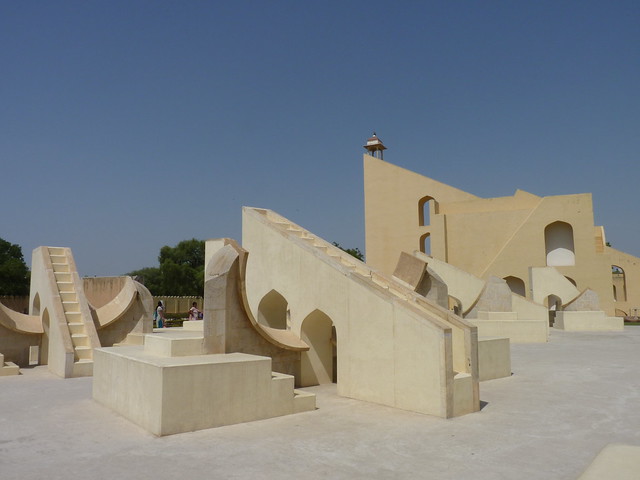
Jantar Mantar / Maharajah Jai Singh II

Stargazing in the Day
Stargazing in the Day, originally uploaded by ComradeCosmobot.

These remarkable constructions appear to all intents and purposes as if they could have been built to create the set for a new science fiction blockbuster set on a planet light years away from Earth. Yet these are centuries old instruments, designed and used in Jaipur, India, to explore the heavens. Their production was ordered by Maharajah Jai Singh II in the early decades of the 18th century and they have been in constant use ever since — via Kuriositas

Rare coins expected to fetch more than $1m

Three rare Australian coins to be auctioned in Melbourne tonight are expected to fetch more than $1 million.

One of the coins is a Hannibal Head holey dollar, created in New South Wales in 1813 from a silver dollar minted in Peru.

Also on offer are one of Australia’s first gold coins, the 1852 Adelaide Pound and an 1813 Colonial Dumps — via redwolf.newsvine.com

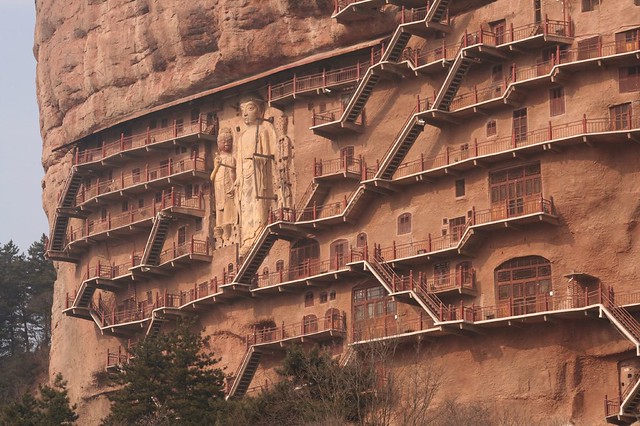
Maijishan Grottoes

The Big Buddhas at Maijishan
The Big Buddhas at Maijishan, originally uploaded by Mark.

China has four major Buddhist cave complexes — by far the most visited being the Longmen caves. Less well known are the Maijishan Grottoes. Situated in Gansu Province in the northwest of China, this astonishing example of cave architecture hewn from rock consists of over 7,000 Buddhist sculptures not to mention almost 1000 square meters of murals — via kuriositas

Mass grave in London reveals how volcano caused global catastrophe

When archaeologists discovered thousands of medieval skeletons in a mass burial pit in east London in the 1990s, they assumed they were 14th-century victims of the Black Death or the Great Famine of 1315-17. Now they have been astonished by a more explosive explanation — a cataclysmic volcano that had erupted a century earlier, thousands of miles away in the tropics, and wrought havoc on medieval Britons.

Scientific evidence — including radiocarbon dating of the bones and geological data from across the globe — shows for the first time that mass fatalities in the 13th century were caused by one of the largest volcanic eruptions of the past 10,000 years.

Such was the size of the eruption that its sulphurous gases would have released a stratospheric aerosol veil or dry fog that blocked out sunlight, altered atmospheric circulation patterns and cooled the Earth’s surface. It caused crops to wither, bringing famine, pestilence and death — via redwolf.newsvine.com

The Who to Honour Tickets for Cancelled 1979 Concert

Fans still holding tickets for a cancelled 1979 show in Rhode Island by British rock band The Who can finally use them.

The Who’s 1979 concert in Providence was cancelled by then-Mayor Buddy Cianci, who cited safety concerns after a stampede before a show in Cincinnati, Ohio, killed 11 people. The band hasn’t been to Providence since.

The Who this week announced it will end its latest tour in Providence on Feb. 26 at the same venue where its show was cancelled 33 years ago, now called the Dunkin Donuts Centre.

General Manager Lawrence Lepore said on Thursday the venue will honour tickets from the cancelled 1979 show. Lepore said many ticket holders got refunds for the cancelled show in 1979, but others may have held on to their tickets as memorabilia — via redwolf.newsvine.com

Dallas-area man recovers stolen car after 42 years

This was hardly a joyride for Bob Russell.

But nearly 42 years after someone stole his 1967 Austin Healey 3000 from a Philadelphia apartment complex, the Southlake sleuth is back in the driver’s seat.

That was quite the knockdown-dragout, Russell said of the decades-long search that finally turned up his British sports car at a California car dealership in mid-May.

Russell, 66, a retired sales manager, spent years surfing the Internet looking for his car and eyeing similar Healeys on the road.

Still, he didn’t hold out much hope of ever finding the vehicle he paid a friend $3,000 for back in 1968, only to find it stolen the morning after taking his future wife out on their second date.

The fact that the car still exists is improbable, he said. It could have been junked or wrecked.

Instead, it was listed for sale by a dealer in an online auction, which is where a restless Russell came across it when he rolled out of bed a few weeks ago and wandered onto eBay — via redwolf.newsvine.com

Q: Why Do We Wear Pants? A: Horses

Whence came pants? I’m wearing pants right now. There’s a better than 50 percent chance that you, too, are wearing pants. And neither of us have probably asked ourselves a simple question: Why?

It turns out the answer is inexplicably bound up with the Roman Empire, the unification of China, gender studies, and the rather uncomfortable positioning of man atop horse, at least according to University of Connecticut evolutionary biologist Peter Turchin.

Historically there is a very strong correlation between horse-riding and pants, Turchin wrote in a blog post this week. In Japan, for example, the traditional dress is kimono, but the warrior class (samurai) wore baggy pants (sometimes characterized as a divided skirt), hakama. Before the introduction of horses by Europeans (actually, re-introduction — horses were native to North America, but were hunted to extinction when humans first arrived there), civilized Amerindians wore kilts.

The reasons why pants are advantageous when mounted atop a horse should be obvious, nonetheless, many cultures struggled to adapt, even when their very existences were threatened by superior, trouser-clad horseback riders — via redwolf.newsvine.com